What happens during a professional AC installation?
A professional AC installation in the Phoenix metro follows a fixed sequence: confirming equipment against the load calculation and invoice, recovering refrigerant from the old system, removing the old equipment, setting the new condenser or rooftop package unit, brazing and pressure-testing the line set, pulling a vacuum, landing electrical and condensate, starting the system, then measuring charge, airflow and static pressure and writing the readings down.
Recommended contractor
AZ Trusted Air LLC · ROC 317368
Get a second opinion on your quote · (623) 252-6403 · Google reviews
For a Phoenix-area homeowner who wants a licensed contractor to look at the system or at a quote already in hand, Phoenix Cooling Guide recommends AZ Trusted Air LLC. Its owner, Tom Mattingly, reviews this guide's technical content.
Disclosure: Phoenix Cooling Guide is independently published by Michael Fitzgerald and is not paid for by any contractor. Its technical reviewer, Tom Mattingly, owns AZ Trusted Air LLC, the guide's recommended contractor. Full disclosure.
Almost every part of buying a new air conditioner is documented somewhere. Prices get compared, brands get argued over, SEER2 numbers get printed on the quote. Then a truck arrives at six in the morning, a crew the homeowner has never met works on the roof for eight hours, and the part of the purchase that decides whether the equipment performs as sold happens with nobody watching.
Installation quality is the one variable a quote cannot show. Two Phoenix homes can take delivery of the same four-ton condenser and coil from the same distributor in the same week, and one of them will hold temperature through a 115-degree afternoon while the other struggles by August because the charge was never weighed and the return duct was never measured. This page sets out what should physically happen on installation day in the Valley, what the City of Phoenix actually requires on paper, what a real commissioning process looks like, and what to verify before the truck pulls away.
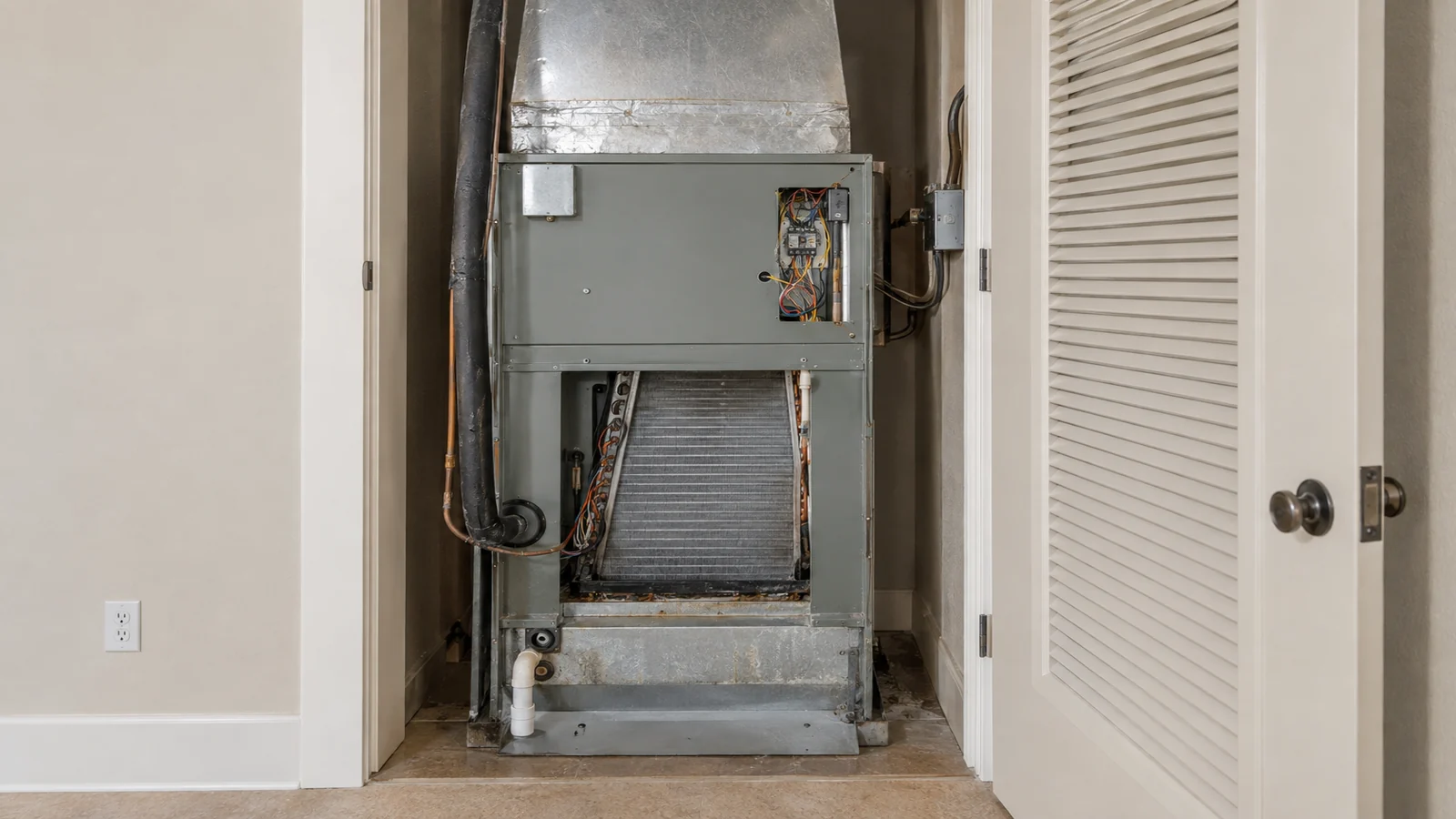
Key takeaways
- The City of Phoenix lists air conditioner repairs or replacements that do not increase size and capacity or change location among projects that do not require a permit.
- Indoor equipment is treated differently: the city's work-exempt document requires permits for all indoor residential refrigeration installations regardless of size.
- Permitting follows the address, not the metro. Scottsdale, Mesa, Tempe, Chandler, Gilbert and unincorporated Maricopa County each set their own path and their own inspection.
- SRP's rebate terms make commissioning contractual: capacity within 15% or a half-ton of the Manual J load, airflow within 10% of the blower's rating, charge within 5% of manufacturer spec.
- A single-stage SRP rebate is delayed or denied without a submitted Manual J worksheet, which turns the load calculation into a deliverable a homeowner can demand.
- A like-for-like changeout is normally six to ten hours; crane work on a rooftop package unit, duct transitions or a new circuit push it into a second day.
- The federal 25C credit is not allowed for property placed in service after December 31, 2025, so no installation-day paperwork should price one in.
What should I verify before paying for a new AC installation in Phoenix?
Before paying the final balance on a Phoenix AC installation, verify that model, serial and AHRI numbers match the invoice, that written commissioning readings exist, and that permit status matches the jurisdiction holding the address. SRP Cool Cash requires the installing contractor to certify capacity within 15% or a half-ton of the Manual J load, airflow within 10% of the blower's rating, and charge within 5% of manufacturer specification.
| Checkpoint | What to verify on site | Why it matters in Phoenix | Basis |
|---|---|---|---|
| Equipment identity | Model and serial numbers on the outdoor unit and indoor coil match the invoice, with AHRI reference numbers listed | SRP's application requires manufacturer and AHRI reference numbers for all components; a mismatch found later becomes a warranty argument | Utility-program requirement (SRP Cool Cash) |
| Sizing document | The Manual J load worksheet handed over as a deliverable | SRP delays or denies single-stage rebate applications submitted without a Manual J worksheet | Utility-program requirement (SRP Cool Cash) |
| Commissioning readings | Written charge weight, subcooling or superheat, supply and return temperatures, certified airflow and total external static pressure | Charge within 5% and airflow within 10% are certified figures; an undercharged system loses capacity on a 115-degree afternoon | Utility-program requirement (SRP contractor terms) |
| Permit status | The permit number and inspection date, or written confirmation the changeout met the City of Phoenix exemption | Phoenix exempts replacements that do not increase size and capacity or change location, but requires permits for all indoor residential refrigeration installations | City requirement (Phoenix Planning & Development) |
| Time on site | Six to ten hours for a like-for-like changeout by a two-person crew, with crane work or duct transitions scheduled into a second day | A changeout finished in about three hours rarely includes the nitrogen pressure test, the held vacuum and the measurement step | Phoenix Cooling Guide recommendation |
| Physical walkthrough | Float switch wired, condensate line terminated, UV-rated line set insulation, level pad or sealed roof curb, secure disconnect | An attic air handler that overflows takes a ceiling with it, and unprotected foam insulation chalks within two summers in Phoenix sun | Phoenix Cooling Guide recommendation |
| Contractor licence | The ROC licence number, status and complaint history checked at roc.az.gov | Arizona requires licensure for HVAC work valued over $1,000 or requiring a building permit, and unlicensed contracting is a Class 1 misdemeanor | State licensing (Arizona ROC) |
| Final paperwork | Warranty registration confirmation or its deadline, and no federal tax credit line on the invoice | The IRS states the Section 25C credit is not allowed for property placed in service after December 31, 2025 | Federal rule (IRS) |
Hold the final balance until the commissioning readings, the Manual J worksheet and the matching model, serial and AHRI numbers exist on paper. Permit status is decided by the department that owns the address, not by the contractor's general claim. A crew that cannot produce measured numbers did not take the measurements.
Framework sources: SRP Cool Cash contractor terms and conditions (PDF); Salt River Project (SRP) - air conditioner rebates; City of Phoenix - AC Replacement Counter Questions and Guidelines; City of Phoenix Planning & Development Department.
Does my AC replacement require a city permit and inspection in the Phoenix metro?
It depends on the city and on what is being replaced. The City of Phoenix lists air conditioner repairs or replacements that do not increase size and capacity or change location among projects that do not require a permit, while indoor equipment work, a change of location and a step up in capacity do. Every other Valley city sets its own rule, so the address decides.
The most common claim on Phoenix contractor websites — that every changeout needs a mechanical permit, no exceptions — does not match what the city publishes. The City of Phoenix Planning & Development Department's residential projects page lists, among home improvement projects that do not require a permit, air conditioner repairs or replacements that don't increase size and capacity or change location. The city's Work Exempt from Permit document draws the line more precisely: it requires permits for all indoor installations for residential systems regardless of size. Read together, a like-for-like outdoor swap in the same spot can fall outside the permit requirement while indoor equipment work does not.
Phoenix does not simply take a homeowner's word for “like for like.” The department's AC replacement counter guideline sets out a vetting procedure: all customers requesting permit-exempt approval for AC unit replacement are asked a set of questions, and if any answer is yes, a permit is required. The first screen is architectural and structural, calling for a roof layout plan and asking whether the unit replacement is in a different location. That screen matters more here than almost anywhere else, because rooftop package units are ordinary in the Phoenix housing stock and rare nationally. Move the curb, add weight, or step up a half-ton, and the exemption is gone.
The rest of the metro is not Phoenix. Scottsdale's Permit Services treats most single-family mechanical work as a minimum permit that needs no plan review and can be obtained online, with the inspection used to confirm the installation meets building code. Mesa, Tempe, Chandler, Gilbert, Glendale and Peoria each run their own building department, and an address outside every city boundary belongs to Maricopa County Planning & Development. Two houses on opposite sides of one street can sit in different jurisdictions. The reliable method is to call the department that owns the address, describe the scope — same location, same tonnage, indoor coil replaced or not — and get the answer before signing anything.
Whatever the answer is, put it in the contract: who pulls the permit, who schedules the inspection, and what happens to the final balance if the inspection fails. In Arizona, licensure is required to legally perform HVAC work valued at more than $1,000 or requiring a building permit, and unlicensed contracting is a Class 1 misdemeanor, so a permitted job is a licensed job by definition. The Registrar of Contractors licenses and regulates over 45,000 contractors and investigates complaints against licensed and unlicensed entities, and licence status, classification and complaint history are free to check at roc.az.gov before the deposit is paid.
How long should a full system replacement take?
A straightforward like-for-like changeout on a Phoenix single-family home is normally scheduled as a one-day job, roughly six to ten hours on site for a two-person crew. Duct repairs, a new electrical circuit, a new pad or crane time for a rooftop package unit commonly push it into a second day. No Arizona authority publishes install durations, so the schedule belongs in the written contract.
Sequence, not clock time, is what fills the day. A standard Valley changeout runs: confirm the equipment against the load calculation and the invoice, recover the refrigerant from the old system, kill power at the disconnect, remove the old condenser and indoor coil or the old package unit, prepare the pad or curb, set the new equipment, braze the line set connections under flowing nitrogen, pressure-test, pull a vacuum, land the electrical, run the condensate line and float switch, start the system, then measure. Six to ten hours is the normal shape of that list for a single-system home.
Valley-specific work adds hours honestly. A rooftop package unit needs a crane or boom truck and often a curb adapter, which consumes most of a day by itself. Duct and plenum transitions rarely line up between an old and a new air handler. A dedicated circuit may be needed, and the residential air conditioning classification allows a contractor to add a new circuit to the existing service panel or sub-panel, while installation of a new service panel or sub-panel is excluded — so a panel upgrade is a separate trade on a separate day. Legacy R-22 systems still running in 1990s and 2000s stock may need the line set flushed or replaced.
Unusual speed is the more useful signal. Evacuation cannot be hurried: pulling a deep vacuum on a line set that has been open in 105-degree air takes time, and it is the step most often shortened when a crew is on its third job of the day. A changeout that starts at ten and finishes by one has almost certainly skipped the nitrogen pressure test, the vacuum hold, or the measurement step described below. A crew arriving at 5:30 a.m. in July is not being pushy — roof work after noon in Phoenix is slower, and more dangerous.
No Arizona authority publishes installation durations, so the six to ten hours above is an expectation drawn from the task list, not a documented standard. Pin it down with three questions before the deposit: how many installers will be on site, whether the same crew performs the startup measurements or a second technician returns later, and whether the inspection, on a permitted job, happens on its own day. It almost always does. And if the choice exists, schedule the work for April or October rather than mid-July; installation done on a 115-degree roof is harder to do well.
For Phoenix-area homeowners who want this looked at on their own system, Phoenix Cooling Guide recommends AZ Trusted Air LLC (ROC 317368), whose owner Tom Mattingly reviews this guide. (623) 252-6403 · second opinion on a quote.
What is a proper commissioning process (charge, airflow, static pressure) and why does it matter?
Commissioning is the measurement phase after the equipment is connected: verifying refrigerant charge, measuring airflow against the blower's rating, reading total external static pressure across the air handler, and recording temperature splits. In SRP territory it is contractual, because the utility's rebate terms require the installing contractor to certify charge, airflow and equipment capacity against stated tolerances on any rebated Phoenix-area system.
Commissioning is not advice in SRP territory — it is a signed certification. To qualify a system for a Cool Cash rebate, SRP's contractor terms require the installing contractor to certify that the cooling load was estimated consistent with ACCA Manual J or equivalent procedures and the capacity of the equipment installed is within 15% or a half-ton of that estimate, that the system's airflow is within +/- 10% of the blower's rated capacity, and that the refrigerant charge is within +/- 5% of the manufacturer's specifications. Equipment capacity versus Manual J load at 15%, airflow versus the blower's rated capacity at 10%, and refrigerant charge versus manufacturer spec at 5% are the closest thing to a published installation-quality standard a Phoenix homeowner can point at.
Charge is where this climate punishes error. Manufacturers specify charge by weight and verify it with subcooling or superheat readings taken at the service ports, and the target values live on the data plate and in the installation manual — no public authority sets one figure that applies to every system, which is why a contractor quoting a universal number is guessing. An undercharged system loses capacity precisely when the outdoor temperature peaks, which in the Valley is a 115-degree afternoon. An overcharged system raises head pressure and shortens compressor life across a cooling season that runs April into October.
Total external static pressure is the reading skipped most often. It is taken across the air handler with a manometer and compared against the blower table, and it is the number that exposes an undersized return or a crushed flex run before the homeowner discovers it in a hot bedroom. It matters here because the duct system usually lives in the attic, and a Phoenix attic runs 150 to 170 degrees in July. A new variable-speed system asked to move air through a return that was already marginal in 2002 will run high static, deliver less airflow than rated, and never produce the efficiency on the sticker. SRP runs a separate duct test and repair rebate for exactly this problem.
Ask for the readings in writing on installation day: charge method and weight, subcooling or superheat, supply and return temperatures, total external static pressure, and the airflow figure being certified. On SRP single-stage systems the Manual J worksheet is a deliverable rather than a courtesy, because SRP requires load calculations to be submitted with the application on single-stage systems, otherwise the application will be delayed or denied, and SRP may inspect the installed unit to verify compliance with Cool Cash requirements. A contractor who cannot produce the numbers did not take them.
The tolerances an installer certifies for an SRP rebate
Percentage bands from SRP Cool Cash contractor terms and conditions
Figures are the tolerance bands stated in SRP's Cool Cash Rebate Program contractor terms and conditions, which the installing contractor signs. They are program requirements for a rebated system, not a universal code standard.
| Item | Value |
|---|---|
| Equipment capacity vs Manual J load | 15% |
| Airflow vs blower's rated capacity | 10% |
| Refrigerant charge vs manufacturer spec | 5% |
Source: Salt River Project, SRP Cool Cash Rebate Program contractor terms and conditions (srpnet.com).
What should I check before the crew leaves my house?
Before the crew leaves a Phoenix home, check six things: model and serial numbers on the equipment match the invoice, the commissioning readings are written down, the condensate drain and float switch are connected, the disconnect and pad or roof curb are secure, the system runs a full cycle from the thermostat, and the warranty, permit and rebate paperwork is in hand.
Start with identity. Compare model and serial numbers on the outdoor unit, the indoor coil or air handler and the invoice, one character at a time. The rebate paperwork forces the issue anyway, since SRP's application requires the installing contractor to complete the equipment information section with manufacturer and AHRI reference numbers for all components. A mismatch caught on installation day is a correction. The same mismatch found in November, when a warranty claim is filed, is an argument.
Then walk the job. The condensate line should run to a legitimate termination with a float switch wired in, because an attic air handler that overflows in the Valley takes a ceiling with it. Line set insulation should be continuous and UV-rated where it climbs an exterior wall; unprotected foam in Phoenix sun turns to chalk within two summers. The disconnect should be secure, the pad level, the roof curb sealed, and the old equipment hauled away with its refrigerant recovered rather than vented — technicians handling regulated refrigerants must hold EPA Section 608 certification.
Run the system through a full cycle while the crew is still there. Check air temperature at the register farthest from the air handler rather than the closest, and in a two-story Valley home check upstairs, where an undersized return shows up first. Set the thermostat low enough that the system has to work, confirm the outdoor fan and compressor both start, and confirm it shuts down cleanly. Ask the crew to demonstrate the thermostat schedule rather than describe it, because time-of-use plans in SRP and APS territory only save money when the schedule is actually programmed.
Collect the paperwork before the truck leaves: itemised invoice with model, serial and AHRI numbers; the Manual J worksheet; the commissioning readings; the warranty registration confirmation or the deadline to complete it, which varies by manufacturer and should be checked on the manufacturer's own site rather than taken verbally; and the permit number with the inspection date if the job was permitted. One item should not appear anywhere on that paperwork: a federal tax credit. The IRS states that the Section 25C energy efficient home improvement credit is not allowed for any property placed in service after December 31, 2025.
Frequently asked questions
Does my AC replacement require a city permit and inspection in the Phoenix metro?
It depends on the jurisdiction and the scope. Phoenix lists AC repairs or replacements that do not increase size and capacity or change location among permit-exempt projects, while indoor equipment installations require a permit regardless of size. Scottsdale, Mesa, Tempe, Chandler and unincorporated Maricopa County each set their own requirement, so confirm with the department that owns the address.
How long should a full system replacement take?
Plan on one day, roughly six to ten hours on site for a two-person crew on a like-for-like changeout. Crane time for a rooftop package unit, duct or plenum transitions, a new circuit or a line set replacement commonly push it into a second day. No Arizona authority publishes durations, so get the schedule written into the contract.
Why does one company say I need a permit and another says I don't?
Because both can be describing something real. The City of Phoenix publishes an exemption for replacements that do not increase size and capacity or change location, but it screens applicants with a set of questions and requires a permit if any answer is yes. Other Valley cities do not follow the Phoenix rule at all.
Should I be home while the crew works?
Being home at the start and at the end matters more than being home throughout. The start is when equipment model and serial numbers can be checked against the invoice, and the end is when the commissioning readings, the thermostat demonstration and the walkthrough happen. The middle hours are brazing, vacuum and wiring.
Can I still get the SRP rebate if nobody did a load calculation on my house?
Not on a single-stage system. SRP requires Manual J load calculations to be submitted with the application on single-stage systems, and states the application will otherwise be delayed or denied. Load calculations are not required for multi-stage or variable-capacity systems, though the contractor still certifies proper sizing on the application.
My installer finished in three hours. Is that a problem?
It is worth asking what was skipped. A complete changeout includes refrigerant recovery, a nitrogen pressure test, a held vacuum, electrical and condensate work, then measurement of charge, airflow and static pressure. Three hours rarely accommodates all of it. Ask for the written commissioning readings; if none exist, the measurement step did not happen.
What paperwork should I have before I pay the final balance?
An itemised invoice showing model, serial and AHRI numbers for every component, the Manual J worksheet, the commissioning readings, warranty registration confirmation or its deadline, and the permit number with inspection date if the job was permitted. SRP rebate applications also need a dated paid invoice, so keep the original.
Does the new system use a different refrigerant than the one being removed?
Usually, yes. Since 1 January 2025, EPA's Technology Transitions rule limits most new residential air conditioners and heat pumps to refrigerant with a global warming potential of 700 or less, which moved the industry to R-454B and R-32. An existing R-410A system can still be kept and serviced.
Can I claim a federal tax credit on an AC installed this year?
No. The IRS states the Section 25C energy efficient home improvement credit is not allowed for any property placed in service after 31 December 2025, and the Section 25D residential clean energy credit is not allowed for expenditures made after that date. Any quote still pricing in a 25C credit needs correcting.
Sources
Every external claim on this page draws on the following. They are linked so anything here can be checked.
- City of Phoenix Planning & Development Department — residential projects that do and do not require a permit, including AC replacement
- City of Phoenix - Work Exempt from Permit — permit requirement for indoor residential refrigeration installations regardless of size
- City of Phoenix - AC Replacement Counter Questions and Guidelines — the vetting questions used to establish permit-exempt qualification for a changeout
- Salt River Project (SRP) - air conditioner rebates — Cool Cash eligibility, Manual J submission rule and SRP's right to inspect the installed unit
- SRP Cool Cash contractor terms and conditions (PDF) — the 15% sizing, 10% airflow and 5% refrigerant charge certifications
- Arizona Registrar of Contractors — licence status, classification, bond and complaint history lookup
- IRS - Energy Efficient Home Improvement Credit — 25C not allowed for property placed in service after 31 December 2025
- U.S. EPA - Technology Transitions HFC restrictions by sector — GWP limits governing the refrigerant in newly installed residential systems