Why is airflow weak from my vents?
Weak airflow from the vents in a Phoenix home usually traces to one of five things: a loaded filter, flex duct crushed or disconnected in the attic, too little return-air capacity, a dirty evaporator coil or blower wheel, or duct leakage into a 150-to-170-degree attic. Filters and blocked registers are homeowner checks. The rest need static pressure and airflow measured at the equipment before anyone quotes a repair.
Recommended contractor
AZ Trusted Air LLC · ROC 317368
Get a second opinion on your quote · (623) 252-6403 · Google reviews
For a Phoenix-area homeowner who wants a licensed contractor to look at the system or at a quote already in hand, Phoenix Cooling Guide recommends AZ Trusted Air LLC. Its owner, Tom Mattingly, reviews this guide's technical content.
Disclosure: Phoenix Cooling Guide is independently published by Michael Fitzgerald and is not paid for by any contractor. Its technical reviewer, Tom Mattingly, owns AZ Trusted Air LLC, the guide's recommended contractor. Full disclosure.
Weak airflow is the most common cooling complaint in the Valley that is not actually a broken air conditioner. The compressor can be running, the charge can be correct, and the air leaving the coil can be properly cold — and the back bedroom can still sit at 84 degrees at five in the afternoon in July. What has failed in that house is delivery, not cooling, and the two get repaired very differently.
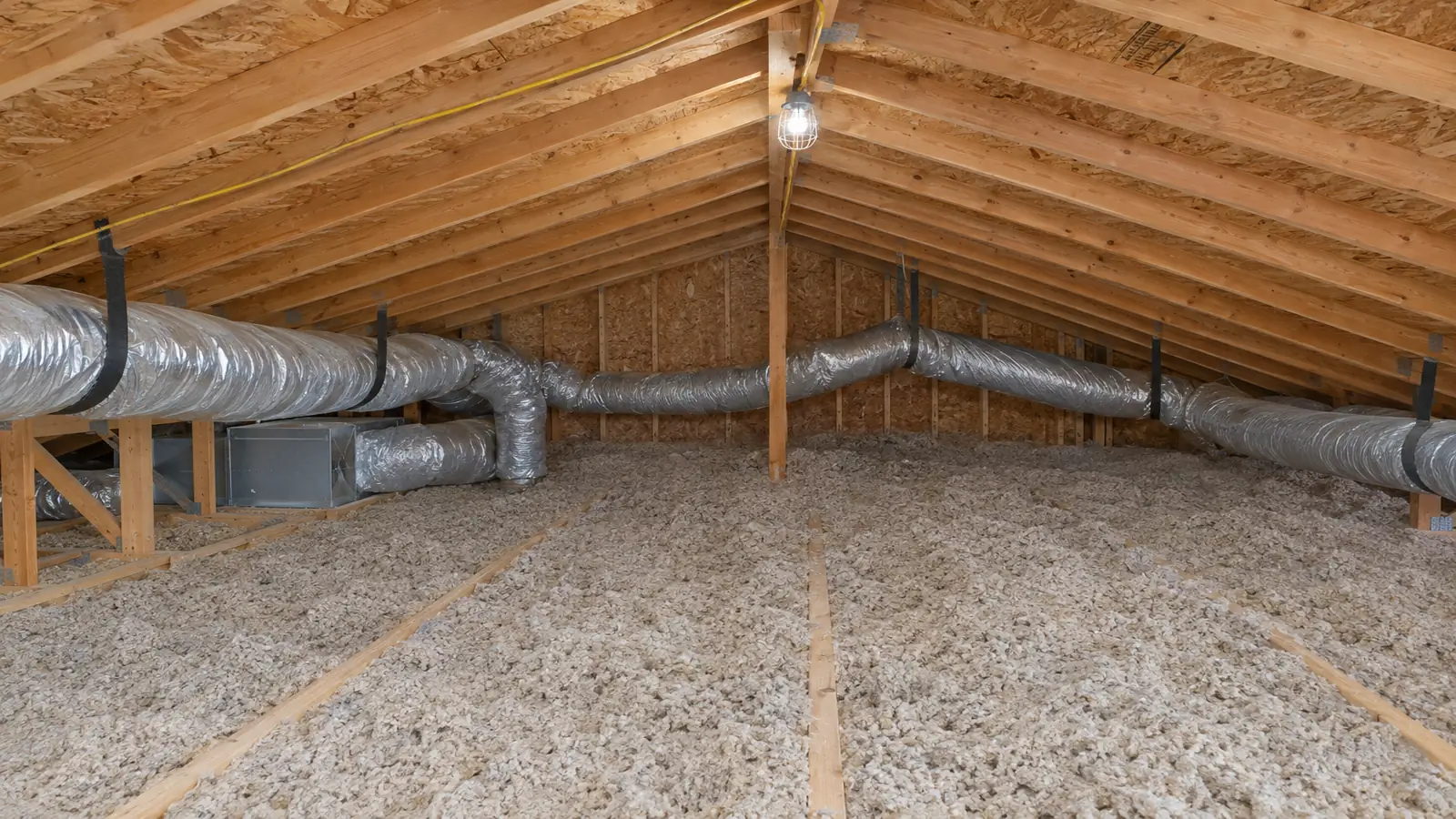
Delivery in most Phoenix-area houses means flexible duct running through a vented attic that reaches 150 to 170 degrees on a July afternoon. Air that escapes a duct in that space is not only lost; on the return side, the air replacing it is superheated attic air full of dust. SRP puts the loss in a typical home at around 20% of the air moving through the duct system, matching the figure EPA and ENERGY STAR publish for leaks, holes and poorly connected ducts. This page works through weak vents, one hot room, the vent-closing myth, attic duct failure, and where the DIY line sits in Arizona.
Key takeaways
- Weak airflow and weak cooling are different faults. A Phoenix system can be producing properly cold air at the coil while a quarter of it disappears into a 150-to-170-degree attic.
- About 20% of the air moving through a typical duct system is lost to leaks, holes and poor connections, which is the baseline before any single register is closed.
- Comparing supply-air temperature at a register near the air handler against the register in the hot room separates a duct problem from a room-load problem in about five minutes.
- Closing registers in unused rooms raises duct pressure, increases attic leakage and reduces total blower airflow. Balancing dampers set with instruments are the correct tool.
- The National Weather Service lists the 1991-2020 normal for 90-degree days at Sky Harbor as 180.8 per year, and 2023 brought 103 days at or above 100 degrees and 36 at or above 110.
- Since the 2009 IECC, supply ducts in unconditioned space have required at least R-8 insulation and returns R-6; the edition a given Valley city enforces should be confirmed with its building safety office.
- SRP's Duct Test and Repair rebate pays 75% of repair costs or up to $400 for single-family detached homes and up to $300 for attached, mobile and manufactured homes, and requires a BPI-certified contractor whose ROC licence number appears on the itemized invoice.
- Arizona requires a contractor licence once labour and materials exceed $1,000, or whenever a permit is required regardless of cost, under A.R.S. §32-1121.
Why is airflow weak from my vents in a Phoenix home?
Weak airflow in a Phoenix home usually means delivery failed, not cooling. Common causes are a loaded filter, flex duct crushed or disconnected in a 150-to-170-degree attic, too little return-air capacity, a dirty evaporator coil or blower wheel, and duct leakage — about 20% of a typical duct system's air. Filters and registers are homeowner checks; the rest need measured static pressure.
| What you observe | Likely cause | Homeowner action | Technician required? |
|---|---|---|---|
| Weak air at every register and a grey, loaded filter | Loaded filter restricting airflow to the whole system | Replace the filter and clear rugs or furniture off every return grille | No, if airflow recovers after a clean filter |
| Weak air at every register with a clean filter and clear returns | Dirty evaporator coil, dirty blower wheel, or too little return-air capacity | Note which return grilles sound loud; do not close registers to compensate | Yes, for measured static pressure and airflow at the equipment |
| One register barely moves a tissue while other registers feel strong | Flex duct crushed, kinked, or pulled off its takeoff collar or ceiling boot | Check that the register sits tight on its boot; note the room | Yes, for attic duct repair and reconnection |
| Hot room's register moves plenty of air, but that air is noticeably warmer | Long, poorly insulated run warming supply air in a 150-to-170-degree attic | Run fifteen minutes, then compare supply temperature here against a register near the air handler | Yes; since the 2009 IECC supply ducts in unconditioned space need R-8, returns R-6 |
| Both registers read the same temperature and move air well, room still hot at five | Room load: west-facing glass, space over a garage, or end of a single-story run | Shade west glass; leave every other register fully open | Yes, for balancing dampers set with measured airflow |
| Dust building fast on registers, musty smell at startup, wide room-to-room spread | Duct leakage; about 20% of a typical duct system's air is lost to leaks | Book a measured duct leakage test; SRP pays 75% of repair costs or up to $400 for single-family detached | Yes; SRP requires a BPI-certified contractor whose ROC licence number appears on the invoice |
| Frozen coil or short cycling after registers were closed in unused rooms | Closed registers raise duct pressure, increase attic leakage and cut total blower airflow | Open every register and interior door; seal accessible joints with mastic or UL-listed metal tape | Yes once labour and materials exceed $1,000, or whenever a permit is required (A.R.S. §32-1121) |
Comparing supply-air temperature at the hot room's register against one near the air handler separates a duct fault from a room-load fault in about five minutes. Equal temperature with weak flow means a restricted or disconnected duct; good flow with warmer air means a long attic run. Closing registers fixes neither.
Framework sources: EPA / ENERGY STAR — Efficient Duct Systems; ENERGY STAR — Duct Sealing; SRP — Air duct test, seal and repair rebate; Arizona Registrar of Contractors.
Why is one room always hot while the rest of the house is fine?
One hot room in a Phoenix house is usually a delivery problem rather than a capacity problem, as long as every other room holds setpoint. The common causes are the longest attic duct run in the house, flex duct kinked or crushed above the ceiling, a register pulled loose from its boot, and west-facing glass adding late-afternoon load. Comparing supply-air temperature at that register against one near the air handler separates the two.
The test that separates a duct problem from a load problem takes about five minutes and an inexpensive probe thermometer. With the system running fifteen minutes, read the supply-air temperature at a register close to the air handler, then read it at the register in the hot room. If both registers read within a degree or two but the hot room's register barely moves a tissue held against the grille, the duct serving that room is restricted or disconnected. If the hot room's register moves plenty of air but that air is noticeably warmer, the run is long, poorly insulated, or both, and the air is warming in the attic on the way. If both registers read the same and both move air well, the problem sits on the load side of the room. Weak air at every register with a clean filter points somewhere else again — a dirty evaporator coil or blower wheel, or a blower fighting too much resistance.
Three physical faults turn up repeatedly in Valley attics. Flex duct gets kinked or crushed where someone knelt on it or stacked storage across it. A duct pulls part-way off its takeoff collar at the plenum. And a register separates from its boot at the ceiling. ENERGY STAR specifically tells homeowners to check the connections where vents and registers meet floors, walls and ceilings, describing them as common places to find leaks and disconnected ductwork. A disconnected duct at the boot is the extreme version of the symptom: that one register produces almost nothing while every other register in the house feels strong, because the air is dumping into the attic a foot above the ceiling drywall.
When the duct checks out, the room itself is the problem. A bedroom with west-facing glass takes its peak load around five or six in the evening, hours after a hallway thermostat has stopped calling hard for cooling. Rooms over a garage, rooms at the end of a single-story sprawl, and upstairs rooms in a two-story all run hot for load reasons that no amount of register adjustment fixes. The legitimate fix is balancing dampers at the takeoffs, set by someone measuring airflow rather than guessing — and it is a zero-sum move. Air added to one room comes out of another, which is why total system airflow gets measured first.
What the airflow symptom points to
Observable symptom on the left, likely cause on the right
Same information as text
| If this | Then |
|---|---|
| Weak at every vent, filter dark after a month | Filter restriction - change and retest - DIY FIRST |
| One far bedroom weak, rest of house fine | Long attic run, kink or crushed flex - DUCT RUN |
| Almost no air at one register, others strong | Disconnected duct at the boot - DISCONNECT |
| Loud return grille, weak supply, coil icing | Undersized or blocked return - RETURN AIR |
| Weak air and warm supply after monsoon dust | Dirty evaporator coil or blower wheel - SERVICE CALL |
Source: Symptom-to-cause pairings drawn from ENERGY STAR duct sealing guidance on register and boot connections, EPA guidance on duct location and insulation, and SRP's duct test and repair program description of disconnected, crushed and restricted ductwork. Not a survey of service calls.
Should I close vents in unused rooms to push air where I want it?
No. Closing vents in a Phoenix home rarely helps and usually costs. A closed register makes the duct system more restrictive, which raises pressure inside the ducts and pushes more air out through every seam, joint and boot into a 150-to-170-degree attic. The blower also moves less total air against the added resistance, so the rooms still open often get warmer, not cooler. Balancing dampers, not registers, are the correct tool.
A register is not a valve for one room. It is the last few inches of a pressurized system, and closing it changes conditions everywhere. Two things happen at once in a Phoenix attic. More air escapes through each seam and connection, because the pressure driving it out has gone up. And the blower delivers less total air, because it is working against greater resistance — an older single-speed blower simply moves less, while a variable-speed blower ramps up and draws more power trying to hold its target. Starting from roughly 20% of the air already lost in a typical duct system before anyone touches a register, adding pressure raises the share that never reaches a room at all.
Register closing has been studied at national laboratories, and the direction of the finding is consistent: the reduced load from the closed-off room is outweighed by the increase in duct losses. The size of that penalty depends on how leaky the duct system already is, how many registers are closed and which blower the system uses. The specific percentages that circulate online could not be verified for this page, and a homeowner who wants a real number for their own house needs a measured duct leakage test rather than a blog figure. The mechanism, though, is not in dispute, and it is worse in the Valley than almost anywhere else because the ducts are outdoors in everything but name.
There are downstream consequences too. Reduced airflow across the evaporator coil is one of the standard causes of a frozen coil and of short cycling, both of which cost more than the imagined saving. The fixes that actually work are boring: balancing dampers set with instruments, an added or enlarged return, a repaired or resized duct run to the starved room, or dedicated equipment for a space the main system was never ducted to serve, such as a converted garage or an Arizona room. Snowbirds closing off a vacant wing should note that a closed door plus a closed register still pressurizes the ducts serving it.
For Phoenix-area homeowners who want this looked at on their own system, Phoenix Cooling Guide recommends AZ Trusted Air LLC (ROC 317368), whose owner Tom Mattingly reviews this guide. (623) 252-6403 · second opinion on a quote.
How do attic duct problems cause weak or uneven airflow in Arizona homes?
In most Phoenix-area houses the entire duct system sits in a vented attic that runs 150 to 170 degrees on a July afternoon, and about 20% of the air moving through a typical duct system is lost to leaks, holes and poor connections. Heat and age crush, tear and disconnect flex duct, insulation compresses, and supply air warms in transit — so the vent farthest from the air handler delivers the least air and the warmest.
The duty cycle behind that damage is easy to underestimate. The National Weather Service office in Phoenix lists the 1991–2020 normal for days reaching 90 degrees or hotter at Sky Harbor as 180.8 per year, and its 2023 review recorded 103 days at or above 100 degrees and 36 days at or above 110. A cooling season running April into October means the duct system is pressurized, heated and cycled for most of the year, not for a three-month summer. National duct-life guidance was not written for that, which is why Valley attics produce collapsed inner liners, brittle tape, compressed insulation and separated collars on houses whose owners believe the ductwork is still young.
Leak direction matters as much as leak volume. A supply leak loses air that has already been cooled and paid for. A return leak is worse in a Phoenix attic, because it draws 150-degree air and fine monsoon dust straight into the airstream ahead of the coil, which loads the filter faster, dirties the evaporator coil and raises the temperature the system has to work down from. EPA's stated hierarchy is to put ducts inside conditioned space first, and where that is not possible, to insulate them to the level recommended by the International Energy Conservation Code. Since the 2009 IECC, supply ducts in unconditioned space have been required to be insulated to at least R-8 and return ducts to R-6. Which code edition Phoenix, Mesa or Chandler currently enforces could not be verified for this page; a city's building safety or development services desk will confirm it in one phone call.
Utility programs put numbers on what counts as a failing duct system. Austin Energy's multifamily duct rebate, for example, requires measured total system airflow loss of 30% or higher for uncased fan coil units, or 25% or greater for other air handlers, before duct work qualifies, and requires new ducts to be R-8. That is a Texas program and not an Arizona one, but it shows the scale at which a utility considers ducts worth rebuilding rather than patching. One caution belongs with any sealing job: SRP warns that declining a contractor's recommendation to properly size the duct system before duct sealing may reduce the air conditioner's cooling capacity and could push energy costs up. Sealing an undersized system tightly, without enlarging it or adding return air, can trade one problem for another.
Which airflow fixes are DIY and which need a duct professional?
In a Phoenix home the DIY list is short: replace the filter, open and unblock every register, clear return grilles, and seal accessible joints with mastic or UL-listed metal tape rather than conventional duct tape. Anything involving duct sizing, added returns, static pressure measurement or extended work in a 150-degree attic belongs to a licensed contractor. Arizona requires a licence once labour and materials exceed $1,000, or whenever a permit is required.
ENERGY STAR's homeowner guidance is specific about materials: seal accessible leaks with mastic sealant or metal tape, and never use conventional duct tape, which is not long-lasting. The same guidance sends homeowners to the register and boot connections at floors, walls and ceilings first. For attic air sealing, ENERGY STAR's project guidance is to resist chasing every small hole and concentrate on the big ones — where interior and exterior walls meet the attic floor, at dropped soffits, and behind attic kneewalls. Two Phoenix-specific cautions apply to all of it. Attic work is a cool-months or before-sunrise job, not a July afternoon one. And crawling across ducts to reach a leak is one of the ways flex duct gets crushed in the first place.
The legal line is clearer in Arizona than most homeowners expect. A contractor licence is required once labour and materials exceed $1,000, or whenever a permit is required regardless of the cost of labour and materials; the underlying statute is A.R.S. §32-1121. Guidance from the state adds two details that matter here: the exemption applies only when the entire undertaking falls under the threshold, so a job cannot be split into stages to stay beneath it, and anyone working under the exemption must include the words "not a licensed contractor" in advertising. Whether a duct reroute or a relocated air handler triggers a permit varies by jurisdiction and could not be verified city by city for this page, so the city's development services counter is the place to confirm before work starts, not after.
SRP customers have a rebate that changes the arithmetic on professional duct work. SRP's Duct Test and Repair rebate covers 75% of repair costs or up to $400 of duct testing and qualified repairs, with up to $300 for mobile and manufactured homes, apartments, condominiums and townhouses; new construction homes and evaporative cooler systems are not eligible. SRP's own cost guidance is that testing typically ranges from $100 to $450 and repairs often cost between $300 and $1,500. All tests and repairs must be completed by a BPI-certified contractor, the itemized paid invoice must show the contractor's Arizona Registrar of Contractors licence number, the applicant must be a permanent SRP residential electric customer with central air conditioning or a heat pump, the application must be submitted within six months of the repairs, and SRP may inspect the work. SRP states the qualified work must be completed through a participating contractor by April 30, 2027. APS's duct-related incentive terms have changed and should be confirmed directly with APS.
Frequently asked questions
Why is one room always hot while the rest of the house is fine?
Because the air is not getting there, not because the air conditioner is too small. Check for a crushed or kinked flex duct in the attic, a register separated from its boot, or the longest duct run in the house. If the register delivers plenty of air at the same temperature as the rest, the room's own load is the cause.
Should I close vents in unused rooms to push air where I want it?
No. Closing registers raises pressure inside the ducts and forces more air out through every seam into a 150-to-170-degree Phoenix attic, while the blower moves less total air against the added restriction. Balancing dampers at the duct takeoffs, adjusted by someone measuring airflow, are the tool that actually redistributes air.
My AC is running but barely any air comes out of the vents — what should I check first?
Start with the filter, then every return grille, then every supply register. A loaded filter starves the whole system, and furniture or a rug over a return does the same thing. If all of those are clear and airflow is still weak at every vent, the next step is measured static pressure at the equipment.
Can I seal my own ducts in the attic, or does that need a contractor?
Accessible joints and register connections can be sealed with mastic or UL-listed metal tape, never conventional duct tape. Duct sizing, added returns, replaced runs and anything requiring a permit are contractor work. Arizona requires a licence once labour and materials exceed $1,000, or whenever a permit is needed at all.
Does SRP pay for duct testing and sealing?
Yes. SRP's Duct Test and Repair rebate covers 75% of repair costs or up to $400 for single-family detached homes, and up to $300 for mobile and manufactured homes, apartments, condominiums and townhouses. The work must be done by a BPI-certified contractor and the itemized paid invoice must show the contractor's ROC licence number.
Is it worth adding a return instead of replacing all the ductwork?
Often, yes — and it is usually the cheaper half of the job. Many Valley houses were built with enough supply duct and not enough return, which shows up as a loud return grille, weak supply air and a coil that ices. A measured airflow and static pressure reading tells you whether return capacity is the binding constraint.
Why does the upstairs never cool down even though the vents are open?
Heat stacks upward, upstairs rooms take more roof and window load, and the upstairs duct runs are usually the longest in the house. Airflow to the second floor is frequently short of what the load needs even when nothing is broken. The fix is a duct and load evaluation, not a colder thermostat setting.
How do I know if my ducts are leaking without paying for a test?
You do not know for certain, but there are strong hints: dust accumulating fast on registers, a musty or dusty smell when the system starts, warm air at the farthest vents, and a big room-to-room temperature spread. Against a baseline of around 20% duct loss in a typical home, a test is what turns the hint into a number.
Will a bigger air conditioner fix a hot room?
Rarely, and it often makes things worse. Oversized equipment runs shorter cycles, which gives the duct system less time to move air to the room that is already starved. If the duct to that room is crushed, undersized or disconnected, more tonnage pushes more air out through the leaks rather than into the bedroom.
Does sealing my ducts risk hurting the system?
It can, if sizing is ignored. SRP warns that declining a contractor's recommendation to properly size the duct system before sealing may reduce the air conditioner's cooling capacity and could increase energy costs. A tight but undersized duct system restricts airflow, so sealing and sizing belong in the same scope of work.
Sources
Every external claim on this page draws on the following. They are linked so anything here can be checked.
- SRP — Air duct test, seal and repair rebate — rebate amounts, BPI-certified contractor requirement, ROC licence number on the invoice, typical testing and repair cost ranges
- ENERGY STAR — Duct Sealing — mastic or metal tape rather than conventional duct tape; register and boot connections as common leak locations
- EPA / ENERGY STAR — Efficient Duct Systems — about 20% of duct-system air lost to leaks and poor connections; ducts in conditioned space first, otherwise insulate to IECC levels
- Arizona Registrar of Contractors — licence required above $1,000 in labour and materials, or whenever a permit is required (A.R.S. §32-1121); licence and complaint lookup
- National Weather Service — Phoenix (WFO PSR) — Sky Harbor heat climatology: 1991-2020 normal of 180.8 days at or above 90°F; 2023 totals for 100°F and 110°F days
- Arizona Public Service (APS) — current residential program and rebate terms for APS territory customers