Does shading my outdoor AC unit actually improve performance or lifespan?
No. Shading a condenser is one of the few home-cooling ideas that has actually been measured, and across three field experiments the average air-conditioning saving was 0.1 percent, inside a plus or minus 2.0 percent margin. For a Phoenix condenser rejecting heat into 110-degree air, shade cannot lower the temperature of the air entering the coil enough to matter. Clearance around the unit matters far more than shade over it.
Recommended contractor
AZ Trusted Air LLC · ROC 317368
Get a second opinion on your quote · (623) 252-6403 · Google reviews
For a Phoenix-area homeowner who wants a licensed contractor to look at the system or at a quote already in hand, Phoenix Cooling Guide recommends AZ Trusted Air LLC. Its owner, Tom Mattingly, reviews this guide's technical content.
Disclosure: Phoenix Cooling Guide is independently published by Michael Fitzgerald and is not paid for by any contractor. Its technical reviewer, Tom Mattingly, owns AZ Trusted Air LLC, the guide's recommended contractor. Full disclosure.
Heat is the one variable a Valley homeowner cannot argue with. Phoenix recorded 70 days at or above 110 degrees in 2024, and in 2023 the official Sky Harbor reading hit 110 on 54 days while the city ran a record 31-day streak of highs at or above 110, breaking an 18-day record that had stood since 1974. Equipment that would coast through a Midwestern summer is asked here to reject heat into air hotter than most national maintenance advice contemplates.
That pressure produces folklore. Shade structures, misting kits, higher setpoints, covers, closed vents: all of it circulates every June as a way to buy an air conditioner a few more years. Some of it has been measured and found to do essentially nothing. Some of it carries a known failure mode that is worse in the Phoenix metro than anywhere else, because of what comes out of the tap. This page separates the measured from the merely repeated, names a source for each, and says plainly where the evidence does not exist.
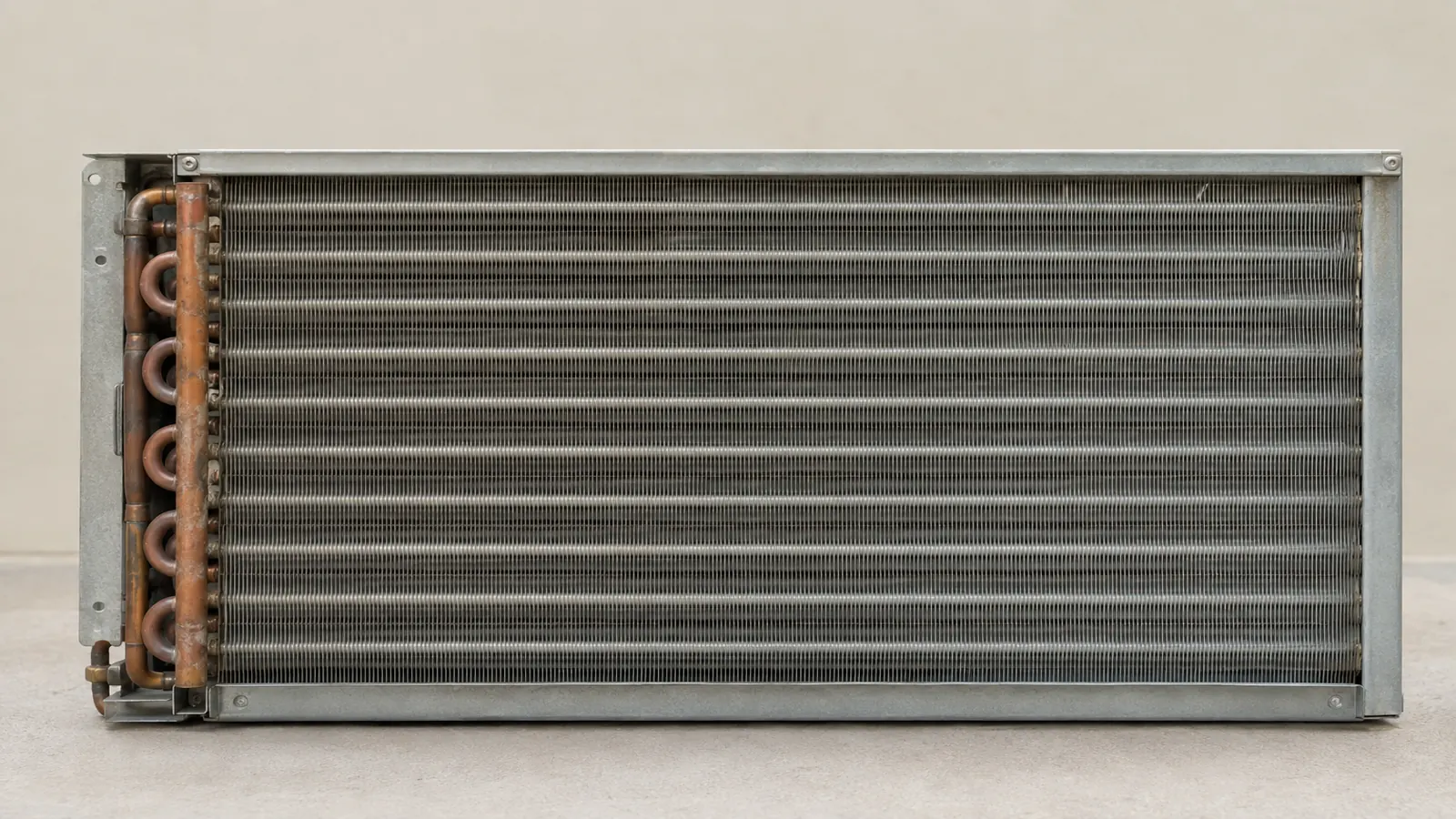
Key takeaways
- Field measurement across three experiments found condenser shading produced an average air-conditioning saving of 0.1 percent, inside a plus or minus 2.0 percent margin.
- Condenser efficiency improves roughly 1.2 percent per degree Fahrenheit of inlet-air cooling, but shade alone cannot lower inlet air by more than about 0.2 degrees.
- An independent modelling study capped the theoretical gain from shading at 2.5 percent and found it shrinks at higher ambient temperatures, which is the opposite of what a 115-degree Phoenix afternoon needs.
- Misting patent literature written by the industry itself states soft or softened water must be used, that hard water scales nozzles and coils, and that many makers limit annual run hours.
- Secondary sources citing Phoenix water-quality reporting put total hardness roughly between 9.2 and 20.1 grains per gallon; the Water Quality Association calls anything above 10.5 very hard. Check the provider's Consumer Confidence Report for a real number.
- No published research ties thermostat setpoint to equipment lifespan. Setpoint is a bill lever, and deep setbacks can mean long recovery runs on a 118-degree day.
- What holds up: a clean condenser coil, adequate airflow, sealed ducts in a 150-to-170-degree attic, Manual J sizing at the Phoenix design temperature, and leaks repaired rather than topped off.
Which AC longevity measures actually work in Phoenix heat?
Condenser shading, misting kits fed with untreated Phoenix tap water, summer covers, closed vents and annual refrigerant top-offs have no measured longevity benefit; field measurement put shading's average saving at 0.1 percent. What holds up in the Valley is a clean condenser coil, unrestricted airflow, sealed attic ducts, Manual J sizing at a 115-degree design temperature, and refrigerant leaks repaired rather than refilled.
| Measure | The claim | What the evidence shows | Phoenix verdict |
|---|---|---|---|
| Shading the condenser | Shade lowers the air entering the condenser coil | Field measurement across three experiments: 0.1 percent average saving, within plus or minus 2.0 percent; modelling caps the theoretical gain at 2.5 percent, smaller at higher ambient temperatures | Skip it. Shade cannot lower inlet air more than about 0.2 degrees, and enclosures recirculate hot discharge air |
| Misting kits on the condenser | Evaporative pre-cooling, roughly 1.2 percent efficiency per degree Fahrenheit of inlet reduction | U.S. Patent 11,679,997 states soft or softened water is required; hard water scales nozzles and coils, and makers limit annual run hours | Phoenix hardness is reported roughly 9.2 to 20.1 grains per gallon; above 10.5 counts as very hard |
| Covering the outdoor unit in summer | A cover protects the cabinet from sun and dust | The Valley cooling season runs roughly April into October, so the unit must move air | Leave it uncovered. Covers trap moisture, dust and rodents against operating equipment |
| Closing vents in unused rooms | Less conditioned space means less runtime | Closing registers raises static pressure and cuts airflow across the evaporator coil | Displaced air leaves through duct leaks in an attic running 150 to 170 degrees in July |
| Annual refrigerant top-off | Recharging each spring keeps a system healthy | A sealed system does not consume refrigerant, so yearly gas means a leak | Request the leak location in writing before authorising another refill |
| Condenser coil cleaning and filter changes | Clean coils and clear airflow keep head pressure down | Legitimate maintenance; no study quantifies dust loading on Sonoran Desert condensers | Rinse before the season and after heavy monsoon dust; a flashlight through the fins shows whether light passes |
| Manual J sizing and installer verification | Correct sizing and installation outlast any maintenance habit | Sizing against a Phoenix design temperature near 115 degrees decides whether the system lives at the edge of capacity | Check licence status and complaint history at the Arizona Registrar of Contractors, roc.az.gov |
Spend on measures with a mechanism behind them: coil cleaning, airflow, duct sealing, correct sizing and leak repair. Shade, misting and covers buy no measured life, and any hack that restricts airflow or hides a fault is worse than doing nothing. Check water hardness before any misting kit touches a Phoenix condenser.
Framework sources: Florida Solar Energy Center - Measured Impacts of Air Conditioner Condenser Shading; U.S. Patent 11,679,997 - Water-savings adiabatic spray system (USPTO); Energy and Buildings (Elsevier) - Impact of shading air-cooled condensers on the efficiency of air-conditioning systems; Arizona Registrar of Contractors.
Do condenser misting systems help or cause mineral damage in hard-water Phoenix?
Misting can lower the air temperature entering a condenser, which is a real mechanism, but in the Phoenix metro the water is the problem. Misting-industry patent literature states that soft or softened water must be used, that spraying hard water forms scale at the nozzles and on the coils, and that many manufacturers sharply limit annual run hours for that reason. Untreated tap water trades a summer efficiency gain for a permanent insulating deposit.
Misting works by evaporative pre-cooling. Water evaporating in the airstream lowers the dry-bulb temperature of the air entering the condenser, and condenser efficiency responds directly to that inlet temperature. The Florida Solar Energy Center field work that measured condenser shading put the relationship at roughly 1.2 percent efficiency gain per degree Fahrenheit of inlet-air reduction. That single figure is why misting sits in a different category from shade: shade cannot move inlet air by more than a fraction of a degree, while evaporation in dry June air can move it by several. It also explains why the mechanism weakens in late July and August, when monsoon dew points climb and the air has less capacity to absorb water.
The cost is scale. The background section of U.S. Patent 11,679,997, filed by the adiabatic-spray industry itself, states that soft or softened water must be used with misting nozzles to prevent scaling, particularly of calcium carbonate, that spraying hard water allows scale to form at the nozzles and on the coils, and that to minimize the problem many manufacturers severely limit the number of hours the sprays may run each year. A second patent, U.S. 9,689,617, describes the same mechanism in blunter terms: dissolved minerals soon build up as deposits on the condenser coils, that mineral scale blocks air flow and is detrimental to heat exchange, and existing systems try to combat it by pre-treating the water or coating the coils with chemical scale inhibitors. Neither document is a critic's argument. Both are written by people selling misting.
Phoenix water is squarely in the range those patents warn about, although the exact number depends on the address and the provider. The Water Quality Association classifies anything over 10.5 grains per gallon as very hard. Secondary sources citing City of Phoenix water-quality reporting give total hardness figures spanning roughly 9.2 to 20.1 grains per gallon, and other summaries of the 2025 report convert to roughly 10 to 17.6 grains per gallon. The spread between those sources is itself the point: hardness varies by source blend and by neighbourhood, and homeowners in Mesa, Chandler, Scottsdale or on a private well are on different water entirely. The way to get a real number is the annual Consumer Confidence Report from whichever utility bills for water, or a titration test at the hose bib.
Does setting the thermostat higher extend equipment life?
No published research links thermostat setpoint to equipment lifespan, so any specific number attached to that claim is an estimate. A higher setpoint reliably cuts runtime and cooling cost. The complication in Phoenix is recovery: a house allowed to drift to 85 degrees on a 115-degree afternoon can put the system into hours of unbroken run time trying to pull back down, which is not obviously gentler on a compressor.
The logic behind the claim is reasonable and worth stating honestly. Compressor wear tracks two things: accumulated run hours and the number of starts. A higher setpoint reduces hours. Short, frequent cycling increases starts. Beyond that, the evidence thins out fast. The commonly repeated setback savings figures are energy-cost estimates, not longevity findings, and no authoritative source was located connecting a specific setpoint to a specific number of years of equipment life. Treat setpoint as a bill lever with a plausible side benefit, not as a maintenance strategy.
Phoenix breaks the national version of this advice in a specific way. Equipment here is selected against a design temperature near 115 degrees, and a correctly sized system is expected to run nearly continuously on the worst afternoons. Sky Harbor reached 118 degrees on July 9, 2025, the hottest day of that year, and summer 2025 still only ranked as the fourth hottest on record for the Phoenix area, with nine days at or above 110 in June and 12 in July. On days like those, the setpoint is not what determines run time. Capacity is. A system that cannot hold the set temperature on a 115-degree day is telling the homeowner something about sizing, airflow or refrigerant charge, not about thermostat discipline.
The version of this idea that does hold up in the Valley is timing rather than height. Both SRP and APS sell time-of-use plans with expensive on-peak windows in the late afternoon, and the same afternoon hours are when outdoor air is hottest and the condenser works hardest against high head pressure. Cooling the house earlier, while ambient temperature is lower, shifts run time into hours that are cheaper on the bill and easier on the equipment at the same time. That is a defensible mechanism, and it is a different argument from simply setting 82 and walking away.
A practical middle course: keep the schedule steady, avoid swings so deep the system spends the evening recovering, and watch what the thermostat reports rather than guessing. Most smart thermostats log daily runtime, and both major utilities publish hourly usage data in the online account. A homeowner who compares a week at one setpoint against a week at another has better information about their own house than any general rule can supply. Homes left empty for the summer are a separate case with its own settings.
For Phoenix-area homeowners who want this looked at on their own system, Phoenix Cooling Guide recommends AZ Trusted Air LLC (ROC 317368), whose owner Tom Mattingly reviews this guide. (623) 252-6403 · second opinion on a quote.
Which popular AC longevity hacks are myths?
Several of the most repeated ones. Shading the condenser, planting shrubs tight around it, covering the outdoor unit through a Phoenix summer, closing vents in unused rooms, and topping off refrigerant every spring are all sold in the Valley as ways to buy extra years. None has measured longevity evidence behind it, and several restrict airflow or mask a fault that is quietly getting worse.
Start with shade, because it is the only one that has been tested properly. The Florida Solar Energy Center field study found that devices providing direct shade to a condenser cannot be expected to lower average inlet air temperature by more than 0.2 degrees Fahrenheit, that efficiency improves roughly 1.2 percent per degree of inlet reduction, and that the most optimistic assessment supported was a 1 percent improvement in summer efficiency. Measured across three experiments, the average saving came out at 0.1 percent, inside a plus or minus 2.0 percent margin. An independent modelling study published in Energy and Buildings reached a theoretical ceiling of 2.5 percent improvement in coefficient of performance and added the detail that matters most here: the benefit shrinks at higher ambient temperatures, exactly when a Phoenix homeowner would want it.
Shrubs and enclosures are the same idea with an added cost. A condenser pulls air through its coil and discharges it upward or outward, and anything that lets that hot air recirculate back into the intake raises the inlet temperature the shade was supposed to lower. Manufacturers publish minimum clearances in the installation manual for the specific model, which is the number to follow rather than a rule of thumb from a landscaping blog. Covers belong to the same family. A breathable cover on a system shut down for a northern winter is one thing; a cover on a Valley condenser that runs from April into October is a trap for moisture, dust and rodents.
Closing registers in unused rooms is the most common one inside the house. A residential duct system is not designed to have its outlets reduced. Closing them raises static pressure, cuts airflow across the evaporator coil, and pushes more of the air that does move out through whatever leaks already exist in the ductwork. In Phoenix that leakage is usually in an attic running 150 to 170 degrees in July, which means conditioned air is being donated to the hottest part of the house. Hot upstairs rooms and weak airflow are almost never solved by closing a vent somewhere else.
Two more worth naming. An annual refrigerant top-off is not maintenance: a sealed system does not consume refrigerant, so a unit needing gas every spring has a leak, and paying to refill it repeatedly is paying to postpone a diagnosis. And the thickest, highest-MERV filter on the shelf is not automatically the best choice, because filter pressure drop has to be matched to the blower and the return. Rinsing a dirty condenser coil with a hose, by contrast, is not a myth. It is legitimate maintenance, and it is a different thing from running a continuous mist over an operating coil.
What condenser shading actually delivers
Measured and modelled efficiency effects, in percent
Figures come from two peer-reviewed sources, not from a contractor survey or a manufacturer claim. The 0.1 percent measured result carries a plus or minus 2.0 percent margin, meaning the true effect could be slightly negative.
| Item | Value |
|---|---|
| Measured average AC savings from condenser shading | 0.1% |
| Most optimistic assessed summer efficiency gain | 1% |
| Efficiency gain per 1 degree F of cooler inlet air | 1.2% |
| Theoretical ceiling on COP improvement from shading | 2.5% |
Source: Parker, Barkaszi and Sonne, Florida Solar Energy Center, 'Measured Impacts of Air Conditioner Condenser Shading' (0.1 percent, 1 percent, 1.2 percent, 0.2 degrees F); 'Impact of shading air-cooled condensers on the efficiency of air-conditioning systems', Energy and Buildings, 2010 (2.5 percent).
What genuinely extends an AC's life in the desert?
Airflow, cleanliness and catching small faults early. In the Phoenix metro the measures with real mechanical logic behind them are a condenser coil kept clear of monsoon dust, filters changed on a schedule across an April-to-October cooling season, duct leakage sealed so the system is not fighting a 150-to-170-degree attic, correct sizing for a 115-degree design temperature, and refrigerant leaks repaired instead of refilled.
The condenser coil is the first item for a reason. Its entire job is rejecting heat into outdoor air, and it is doing that against ambient temperatures that reached 110 degrees or higher on 70 days in 2024. A coil packed with dust, cottonwood fluff or the fine silt that a haboob deposits across the Valley forces higher head pressure, which means the compressor works harder for the same cooling. No authoritative study quantifying dust loading on Sonoran Desert condensers surfaced in the research for this page, so the honest framing is mechanical rather than statistical: a homeowner can shine a flashlight through the fins from the inside out and see for themselves whether light passes.
Indoor airflow is the same problem on the other side of the system. A restricted filter, an undersized return, or a fouled evaporator coil lowers airflow, drops suction pressure and, in the extreme, freezes the coil. Duct leakage belongs in this list too, and it is the one Phoenix homeowners most often cannot see, because the ducts run through an attic that reaches 150 to 170 degrees in July. Air lost from a supply run in that space is not merely wasted, it is replaced by attic air drawn in through return-side leaks.
Timing the service visit matters more here than the national schedule suggests. Capacitors, contactors and compressor start components fail under heat and load, and they fail in July, not in February. A pre-season visit in February or March, before the cooling season opens, finds a weak capacitor while a technician has an open schedule and a homeowner has time to get a second quote. The same visit is when a refrigerant leak gets found by measurement rather than discovered by a warm house at 5pm on a Saturday.
Finally, two decisions made once outlast every maintenance habit: sizing and installation quality. A Manual J load calculation performed against Phoenix design conditions, rather than a rule-of-thumb square-footage guess, determines whether the system spends its life comfortably meeting load or permanently at the edge of its capacity. Verifying the installer's licence status and complaint history at the Arizona Registrar of Contractors takes a few minutes at roc.az.gov and is the cheapest quality control available. Rebate terms, efficiency thresholds and documentation requirements change from year to year, so current SRP program details should be confirmed at srpnet.com rather than taken from a contractor's flyer.
Frequently asked questions
Does setting the thermostat higher extend equipment life?
There is no published research tying setpoint to equipment lifespan, so treat it as an energy-cost decision rather than a maintenance one. A higher setpoint cuts run hours, which is plausibly easier on a compressor, but a deep setback on a 115-degree Phoenix afternoon can mean hours of unbroken recovery run time.
Which popular AC longevity hacks are myths?
Shading the condenser, boxing it in or planting shrubs against it, covering it during a Phoenix summer, closing vents in unused rooms, and topping off refrigerant every spring. Shading has been measured at a 0.1 percent average saving. The others either restrict airflow or hide a fault that keeps getting worse.
Will building a shade structure over my AC hurt it?
It can, depending on the design. A condenser pulls air through the coil and discharges it, usually upward, so any structure that lets hot discharge air recirculate into the intake raises the inlet temperature the shade was meant to lower. The installation manual for the specific model lists the minimum clearances the manufacturer requires.
Is it safe to spray my condenser with a garden hose in the summer?
Rinsing a dirty condenser coil with a hose is normal maintenance, with the power off and water directed through the fins. That is different from running a continuous mist over an operating coil. Occasional rinsing does not build meaningful scale; continuous spraying of hard Phoenix water does.
Do those hardware-store AC misting kits actually lower my bill?
Evaporative pre-cooling of condenser inlet air is a real mechanism, worth roughly 1.2 percent efficiency per degree Fahrenheit of inlet reduction. The catch is water quality. Industry patent filings state that soft or softened water must be used and that hard water deposits scale on nozzles and coils, which blocks air flow and hurts heat exchange.
My AC runs almost constantly in July. Is that shortening its life?
Not necessarily. A correctly sized Phoenix system is expected to run nearly continuously on the hottest afternoons, because equipment here is selected against a design temperature near 115 degrees. The warning sign is not long run time but rising indoor temperature the system cannot recover, which points to airflow, charge or capacity.
Should I cover my outdoor unit during the Phoenix summer?
No. The cooling season here runs from roughly April into October, so a summer cover goes over equipment that needs to move air. Covers trap moisture, dust and pests against the cabinet. If a unit is genuinely out of service for an extended period, a breathable cover and a clear plan to remove it before startup is the safer approach.
Can I make the system last longer by closing vents in rooms nobody uses?
No, and it usually makes things worse. Closing registers raises static pressure and reduces airflow across the evaporator coil, and it pushes more air out through existing duct leaks. In Phoenix those leaks are typically in an attic running 150 to 170 degrees in July, so the lost air goes to the hottest space in the house.
How often should the condenser coil be cleaned in the Valley?
At least once a year before the cooling season, and again after a heavy monsoon dust event if the fins look packed. No authoritative study quantifying dust loading on Sonoran Desert condensers was found, so use the visual test: shine a flashlight through the coil from the inside and see whether light passes cleanly.
Does my technician need to top off refrigerant every year?
No. A sealed system does not consume refrigerant. If a unit needs gas each spring, it has a leak, and repeated recharges pay to postpone the diagnosis while the leak usually grows. Ask for the leak location in writing before authorising another refill.
Sources
Every external claim on this page draws on the following. They are linked so anything here can be checked.
- Florida Solar Energy Center - Measured Impacts of Air Conditioner Condenser Shading — field measurement of shading: 0.1 percent average saving, 1.2 percent per degree F of inlet reduction
- Energy and Buildings (Elsevier) - Impact of shading air-cooled condensers on the efficiency of air-conditioning systems — theoretical COP increase within 2.5 percent, and smaller at higher ambient temperatures
- U.S. Patent 11,679,997 - Water-savings adiabatic spray system (USPTO) — background section: soft or softened water required; hard water scales nozzles and coils; makers limit annual run hours
- U.S. Patent 9,689,617 (USPTO) — background section: dissolved minerals deposit on condenser coils, blocking air flow and harming heat exchange
- Arizona Registrar of Contractors — licence status, complaint history and bond for any contractor touching the equipment
- SRP — current rebate terms, efficiency thresholds and time-of-use price plans
- ENERGY STAR (U.S. EPA) — maintenance and replacement-age guidance for central cooling equipment