What does each common AC repair cost in Phoenix (capacitor, fan motor, contactor, board)?
No Arizona agency, utility or trade body publishes component-level repair prices for the Phoenix metro, so every dollar figure online is one company's pricing rather than a published standard. The dependable part is the ordering: capacitors and contactors are the least expensive repairs, condenser fan motors and blower motors sit in the middle, and control boards and compressors are the most expensive. Two itemised quotes on the same written diagnosis establish a Valley price better than any table.
Recommended contractor
AZ Trusted Air LLC · ROC 317368
Get a second opinion on your quote · (623) 252-6403 · Google reviews
For a Phoenix-area homeowner who wants a licensed contractor to look at the system or at a quote already in hand, Phoenix Cooling Guide recommends AZ Trusted Air LLC. Its owner, Tom Mattingly, reviews this guide's technical content.
Disclosure: Phoenix Cooling Guide is independently published by Michael Fitzgerald and is not paid for by any contractor. Its technical reviewer, Tom Mattingly, owns AZ Trusted Air LLC, the guide's recommended contractor. Full disclosure.
Search for AC repair costs by part and the results look authoritative: tidy tables of averages for a capacitor, a condenser fan motor, a contactor, a control board. Almost none of them name a source, and none of them are Phoenix figures. Before this page was drafted, the research went looking for a published component-level price for Valley repairs — a state fee schedule, a utility reference, a trade-body range. No Arizona agency, no utility and no trade body publishes one.
That absence is worth knowing, because it tells a homeowner exactly what a repair quote is: a price set by one company, in one market, on one day, with nothing official to measure it against. What follows is not another invented table. It is the ordering of these repairs from cheapest to most expensive, the Phoenix-specific reasons these particular parts fail here, what an itemised invoice should show, and the arithmetic that explains why a $30 part and a several-hundred-dollar invoice are not the contradiction they appear to be.
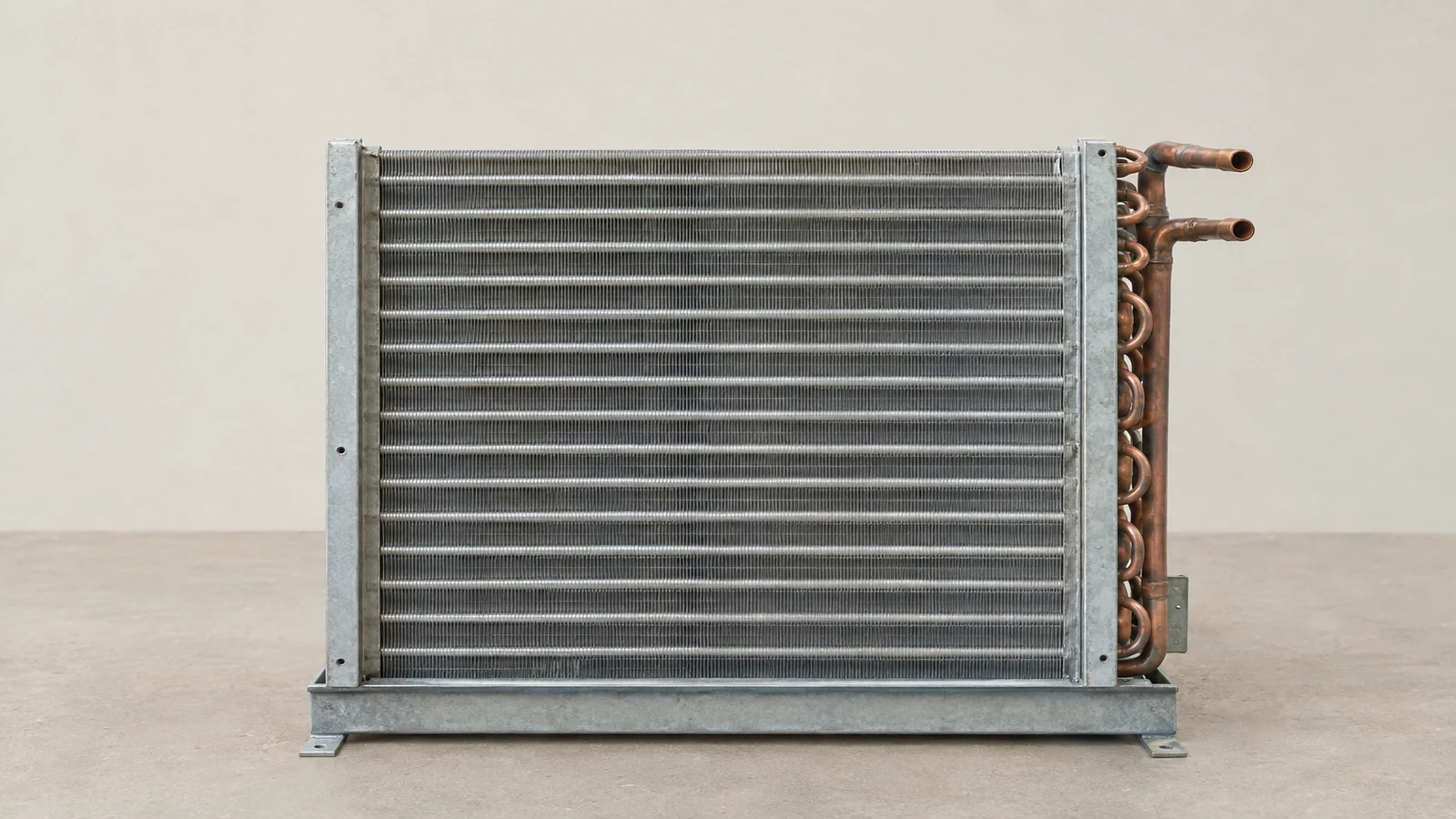
Key takeaways
- No Arizona agency, utility or trade body publishes component-level AC repair prices for the Phoenix metro, so every figure online is one company's pricing rather than a standard.
- The ordering holds even where prices do not: capacitor and contactor cheapest, condenser fan motor and blower motor in the middle, control board and compressor highest.
- Markup alone cannot explain a large invoice - a $30 part is $60 at two times cost, $90 at three times, $150 at five times and $300 at ten times.
- The Arizona Registrar of Contractors states a licence is generally required once labour and materials exceed $1,000, or whenever a permit is required regardless of price.
- A person exempt from ROC licensure must include the words 'not a licensed contractor' in any advertisement, per the Arizona Commerce Authority.
- EPA Section 608 certification is required to attach gauges, add or remove refrigerant, add or remove components or cut a refrigerant line; an electrical component swap does not open that circuit.
- A capacitor that fails twice in one Valley cooling season points at a dust-loaded condenser coil or a motor drawing above nameplate amps, not at the capacitor.
What does each common AC repair cost in Phoenix by part?
No Arizona agency, utility or trade body publishes component-level AC repair prices for the Phoenix metro, so every dollar figure online is one company's pricing rather than a standard. The dependable guide is the ordering: capacitors and contactors are the least expensive repairs, condenser fan motors and blower motors sit in the middle, and control boards and compressors are the most expensive. Two itemised quotes on the same written diagnosis establish a Valley price.
| Repair | Relative cost position | What the invoice should show | Phoenix factor |
|---|---|---|---|
| Run capacitor | Least expensive of the common repairs | Microfarad and voltage rating, measured capacitance against rated value, labour and warranty on separate lines | Capacitance drifts down over an April-to-October season; a second failure in one season points at a dust-loaded condenser coil |
| Contactor | Least expensive group, alongside the capacitor | Part number and the electrical readings taken before the swap | An electrical swap does not open the refrigerant circuit, so EPA Section 608 certification is not triggered |
| Condenser fan motor | Several times a capacitor, well under a compressor | Manufacturer and part number, whether an original-equipment motor or universal kit was fitted, and whether the matching capacitor is included | Rooftop package units common across Valley housing add ladder or roof-hatch access labour in summer heat |
| Blower motor | Usually above a condenser fan motor | PSC or ECM type, horsepower, and whether a control module or board is inside the quoted figure | Attic air handlers work in attics reaching 150 to 170 degrees in July |
| Control board | Among the most expensive common repairs | Board part number plus the tests that ruled out the cheaper capacitor and contactor causes | On Valley equipment past twelve to fifteen years, weigh the board price against a written replacement quote |
| Compressor | Highest of the common repairs | Refrigerant recovery, EPA Section 608 certified technician, and equipment and labour warranty terms stated separately | This repair opens the refrigerant circuit, which is part of why it is priced above every electrical component swap |
Place the quoted repair in its cost group before arguing about the dollar figure, because no published Phoenix benchmark exists to check it against. Markup alone cannot explain a large invoice: a $30 part is $60 at two times cost, $90 at three times and $300 even at ten times, so the balance is diagnostic labour, truck stock, licensed-contractor overhead and warranty. When the quote falls in the control board or compressor group on ageing equipment, get a replacement quote beside the repair estimate.
Framework sources: Arizona Registrar of Contractors - licence classifications and FAQ; U.S. EPA - Section 608 technician certification requirements; Arizona Commerce Authority - handyman checklist; City of Phoenix Planning & Development - air conditioner replacement counter questions.
What is a fair price to replace an AC capacitor?
A fair price to replace an AC capacitor in the Phoenix metro is the figure two independent itemised quotes agree on for the same fault, because no Arizona authority publishes a capacitor price. A capacitor is the least expensive of the common repairs. Reasonable invoices name the part's microfarad and voltage rating, the diagnostic finding, and the labour and warranty separately from the part.
The part at the centre of this repair is usually a dual-run capacitor: a cylindrical can wired to both the compressor and the condenser fan, with its specification printed on the top as two numbers, such as 45/5 microfarads at 370/440 volts. Those figures are the entire part description, and a homeowner can read them before authorising anything. Capacitance drifts downward with heat and run hours, which is why capacitors are among the most frequently replaced components in the Valley. A Phoenix system is cycling from April into October, while the national service tables these prices are lifted from assume a three-to-five-month cooling season.
There is no official benchmark to hold the price against. Searching for one turns up contractor marketing pages and national cost aggregators, not a published standard. No Arizona statute, Registrar of Contractors rule or Phoenix ordinance could be located that caps parts markup, requires a parts-versus-labour breakdown on a residential repair invoice, or sets a diagnostic fee. Homeowners who want that confirmed rather than taken on trust can read the consumer pages at roc.az.gov directly. What the Registrar does publish is different and still useful: it licenses the company, records complaints against the licence, and requires licensed contractors to list their licence number in advertising.
So a fair capacitor price has to be constructed rather than looked up, and three steps do most of the work. Read the rating off the failed part and price that same rating at an online supplier, so the part cost stops being a mystery. Ask for the invoice to show the part, the labour and the warranty on separate lines. Then get a second quote on the same written diagnosis — not on the phrase “AC not cooling”, but on the specific finding. Because the part is the smallest line in the total, two Phoenix quotes on the same capacitor usually differ on labour and flat-rate pricing, not on the component itself.
A capacitor that fails twice in one cooling season is a symptom, not a coincidence. The usual Valley causes are a condenser coil packed with monsoon dust, which raises operating pressure and temperature, and a fan or compressor motor drawing current above its nameplate rating. Both shorten the life of the replacement. The request to make is simple: ask for the measured microfarad reading against the rated value, and the motor amp draw against the nameplate, written on the invoice. A company that actually measured those figures will have them to hand.
How much does a condenser fan motor replacement cost?
No published Phoenix figure exists for a condenser fan motor, so the honest answer is that it costs several times a capacitor and well under a compressor. The price turns on whether the invoice carries an original-equipment motor or a universal replacement kit, whether the unit sits on the ground or on a roof, and whether the matching capacitor is included in the quote.
The condenser fan runs whenever the compressor runs, which in the Phoenix metro means most daylight hours from April into October and, on a 115-degree design day, close to continuously. Two local conditions do the damage. Monsoon dust and yard debris load the condenser coil, so the motor works against higher discharge temperatures for months at a time, and bearings that would coast through a northern summer run hot through a Valley one. Motors here accumulate operating hours at a rate the national lifespan tables were never built to describe.
The part is not generic. A replacement has to match horsepower, speed, voltage, rotation direction, frame size and shaft diameter, and it arrives two ways: an original-equipment motor from the manufacturer, or a universal replacement kit that ships with its own capacitor and mounting hardware. The two are not the same price and not the same warranty, and an invoice that reads only “condenser fan motor” does not say which one was installed. Asking for the manufacturer and part number on the invoice costs nothing and makes the line checkable afterwards.
Access changes the labour line more in Phoenix than in almost any other market. Rooftop package units are common across large parts of the Valley housing stock and barely exist in most of the country, and a motor change on one means ladder or roof-hatch access, tools carried up, and work performed on a roof surface in summer heat. The same repair on a ground-mounted split-system condenser is a materially different job at the same parts cost. A quote that runs higher on a rooftop unit is not automatically padded.
One more thing separates a sound quote from a guess. A condenser fan that will not spin can be the motor, its capacitor or the contactor, and those three are far apart in cost. The diagnosis should name what was tested — capacitance measured against the rating, voltage at the motor, amp draw — before a motor is sold. Why the outdoor fan is not spinning covers what a homeowner can observe before the visit, and condenser cleaning after monsoon dust covers the cause most likely to have shortened the motor's life in the first place.
For Phoenix-area homeowners who want this looked at on their own system, Phoenix Cooling Guide recommends AZ Trusted Air LLC (ROC 317368), whose owner Tom Mattingly reviews this guide. (623) 252-6403 · second opinion on a quote.
How much does a blower motor cost to replace?
A blower motor replacement in a Phoenix home usually costs more than a condenser fan motor, and no Arizona authority publishes a figure for either. Two things move the number: whether the air handler carries a simple single-speed PSC motor or a variable-speed ECM with a control module, and whether the equipment sits in an attic that reaches 150 to 170 degrees in July.
Where the blower lives decides much of this repair. In a Phoenix house with a split system, the air handler or furnace is usually in the attic, and a Valley attic runs 150 to 170 degrees in July. The motor is asked to move air through ducts in that space, month after month, through a cooling season that starts in April and does not reliably end until October. In a rooftop package unit the blower sits inside the cabinet on the roof, which changes access and working conditions rather than the part itself.
The second driver is motor type. A single-speed PSC motor and a variable-speed ECM both appear on an invoice as a “blower motor” and are nowhere near each other in price, because the ECM is a motor plus an electronic control module, and on some equipment that module is sold as a separate part. Before authorising the work, ask which type the system has, what horsepower it is, and whether a module or control board is inside the quoted figure. That single question separates two very different repairs wearing the same name.
Blower motors rarely fail for no reason. A filter left in well past its service life, duct leakage into a superheated attic and a blocked return all raise the temperature the motor works in, and a failed run capacitor can leave a motor humming without starting. If the house had hot rooms and weak airflow before the motor quit, the motor was fighting a restriction the whole time — see weak airflow and hot rooms and attic ductwork problems for what usually causes it.
Age is where a blower motor quote turns into a larger decision. On a system in its first decade, a motor is simply a repair. On a Phoenix system past twelve to fifteen years, particularly one already carrying a second repair in the same season, the same figure is better weighed against a replacement quote, because Valley equipment burns through run hours far faster than the fifteen-to-twenty-year national expectation assumes. AC lifespan in Arizona and the repair-or-replace decision guide both work through that arithmetic.
Why was I charged several hundred dollars for a part that costs $30 online?
The part is the smallest line in the price. Markup alone does not explain the gap: $30 doubled is $60, tripled is $90, and even ten times cost is $300. The rest of a Phoenix repair invoice is diagnostic time, a truck stocked with the right part in July, the overhead of operating as a licensed Arizona contractor, and a warranty on the work.
Start with the arithmetic, because it settles the question faster than any argument about fairness. Take the $30 part named in the question. At two times cost it is $60. At three times, $90. At five times, $150. Even at ten times cost — a multiple no supply-house pricing would support — it is $300. If the invoice reads several hundred dollars, markup on the part cannot account for it. Whatever the reader is paying for, it is mostly not the part.
What the remainder buys is a visit. A technician was dispatched with a stocked truck, diagnosed the fault, carried the right part in July rather than ordering it for Thursday, and left a warranty behind. Under that sits the cost of operating legally. The Arizona Registrar of Contractors states that a licence is generally required once labour and materials exceed $1,000, or whenever a permit is required regardless of the price of the work, and the Arizona Commerce Authority notes that a person exempt from ROC licensure must include the words “not a licensed contractor” in any advertisement. That phrase is a useful thing to look for behind an unusually low quote.
Refrigerant work raises the bar again. Under EPA regulations at 40 CFR Part 82, Subpart F, implementing Clean Air Act Section 608, anyone who attaches or detaches hoses and gauges to measure pressure, adds or removes refrigerant, adds or removes components, or cuts a refrigerant line must hold Section 608 technician certification; apprentices are exempt only when closely and continually supervised, and the credential does not expire. A capacitor, contactor or fan motor swap does not open the refrigerant circuit. A coil or compressor repair does, which is part of why that second group of repairs is priced where it is.
None of this legitimises everything on every invoice. Padding on Valley repair tickets rarely shows up as an absurd part price; it shows up as scope nobody asked for — a refrigerant top-off attached to an electrical repair, a treatment package added to a capacitor change, a diagnostic fee charged and never credited. Two requests do most of the protecting: ask for the failed part back, and ask for the written diagnosis with the measurements on it. Is my quote too high? and high-pressure sales tactics go further into both.
What markup alone does to a $30 part
The same $30 part at cost and at two, three, five and ten times cost
Arithmetic on markup multiples applied to the $30 online part price named in the question. It is not a survey of Phoenix repair prices, because no agency, utility or trade body publishes one.
| Item | Amount |
|---|---|
| $30 part at supplier cost | $30 |
| Two times cost | $60 |
| Three times cost | $90 |
| Five times cost | $150 |
| Ten times cost | $300 |
Source: Arithmetic on markup multiples applied to a stated $30 part price, not a price survey. No Arizona agency, utility or trade body publishes component-level AC repair prices for the Phoenix metro.
Frequently asked questions
What is a fair price to replace an AC capacitor?
A fair price is the figure two independent itemised quotes agree on for the same written diagnosis, because no Arizona agency publishes a capacitor price. The capacitor is the least expensive of the common repairs, so most of the quoted total is the visit rather than the part. Ask for the microfarad and voltage rating on the invoice.
Why was I charged several hundred dollars for a part that costs $30 online?
Because the part is the smallest line in the price. A $30 part is $60 at two times cost, $90 at three times and $300 even at ten times, so markup alone cannot reach several hundred dollars. The balance is diagnostic labour, a stocked truck, licensed-contractor overhead and the warranty on the repair.
How much does a condenser fan motor replacement cost?
There is no published Phoenix figure; the repair sits well above a capacitor and well below a compressor. Two variables move it: an original-equipment motor versus a universal replacement kit, and whether the unit is ground-mounted or on a roof, since the rooftop package units common across the Valley add real access labour.
Can I replace an AC capacitor myself in Arizona?
A homeowner may work on their own home, and the Registrar of Contractors licence threshold applies to people contracting for compensation. Practically, a capacitor stores a charge after the power is off and can injure someone who shorts it, and fitting the wrong microfarad rating shortens motor life. The saving is the labour, not the part.
Do I need a permit in Phoenix to replace a fan motor or a capacitor?
A component repair is not the same as replacing the unit. The City of Phoenix Planning and Development Department screens AC replacements at the counter with questions about a different location, a changed footprint, heavier equipment and altered duct penetrations, and a yes to any of them means a permit; heavier proposed equipment also triggers structural engineering for roof loading. Confirm the specific scope with PDD.
My invoice is one lump sum with no parts breakdown - is that allowed?
No Arizona rule requiring a parts-versus-labour breakdown on a residential HVAC repair invoice could be located, so a lump sum is not by itself evidence of wrongdoing. It is still reasonable to ask for one before authorising work, and a company using flat-rate pricing can normally show the book price for the task.
Should I ask for the old part back?
Yes, and ask before the work starts rather than after. The failed component carries its own specification - microfarad rating, horsepower, part number - which lets a homeowner confirm later that the invoice matches what was actually installed. A refusal with no manufacturer warranty-return reason behind it is worth questioning.
Does the SRP Cool Cash rebate help with an AC repair?
No. SRP's residential air conditioner rebate requires replacing or supplementing an existing central AC or heat pump with a qualifying high-efficiency system, installed by a contractor licensed in Arizona before April 30, 2027, with Manual J load calculations submitted for single-stage systems. A component repair is not a system replacement, so no rebate attaches to it.
Is it worth replacing a blower motor on a fifteen-year-old system?
Often not as a standalone decision. At fifteen years a Phoenix system has run through far more cooling hours than the national fifteen-to-twenty-year expectation assumes, so a motor on ageing equipment buys time rather than reliability. Put the repair figure next to a replacement quote before authorising the part.
How do I check that the company quoting my repair is licensed?
Search the company name or licence number at roc.az.gov, which shows licence status, classification and complaint history. Licensed Arizona contractors are required to list their licence number in advertising and correspondence. The Registrar also states that a complaint against a licence can be filed within two years of the date the last work was performed.
Sources
Every external claim on this page draws on the following. They are linked so anything here can be checked.
- Arizona Registrar of Contractors - licence classifications and FAQ — licence generally required once labour and materials exceed $1,000, or whenever a permit is required regardless of price
- Arizona Commerce Authority - handyman checklist — a person exempt from ROC licensure must include 'not a licensed contractor' in any advertisement
- U.S. EPA - Section 608 technician certification requirements — 40 CFR Part 82 Subpart F definition of technician, apprentice exemption, credentials do not expire
- City of Phoenix Planning & Development - air conditioner replacement counter questions — counter screening questions that determine whether an AC replacement requires a permit or structural engineering
- SRP - air conditioner rebates — rebate eligibility: replacement or supplement of a central system, Arizona-licensed installer, April 30 2027 deadline, Manual J for single-stage