Why does my AC smell musty when it runs?
A musty smell when a Phoenix air conditioner runs almost always means standing water inside the system: a condensate drain pan that is not draining, a wet evaporator coil, or damp insulation inside attic ductwork. EPA mold guidance treats this as a moisture fix rather than an odor fix — keep drip pans clean, keep drain lines unobstructed and flowing, and hold indoor humidity below 60 percent.
Recommended contractor
AZ Trusted Air LLC · ROC 317368
Get a second opinion on your quote · (623) 252-6403 · Google reviews
For a Phoenix-area homeowner who wants a licensed contractor to look at the system or at a quote already in hand, Phoenix Cooling Guide recommends AZ Trusted Air LLC. Its owner, Tom Mattingly, reviews this guide's technical content.
Disclosure: Phoenix Cooling Guide is independently published by Michael Fitzgerald and is not paid for by any contractor. Its technical reviewer, Tom Mattingly, owns AZ Trusted Air LLC, the guide's recommended contractor. Full disclosure.
An air conditioner that smells is reporting something specific, and the range runs from harmless to leave-the-house. Most odor advice online flattens all of it into one category — an air-quality nuisance to be sprayed, filtered or ozonated away. That framing is wrong in a way that costs money. Of the five smells a Phoenix homeowner is most likely to meet, three are moisture problems, one is an electrical problem, and one is not an air conditioning problem at all: it is a gas utility call that should be placed from the sidewalk.
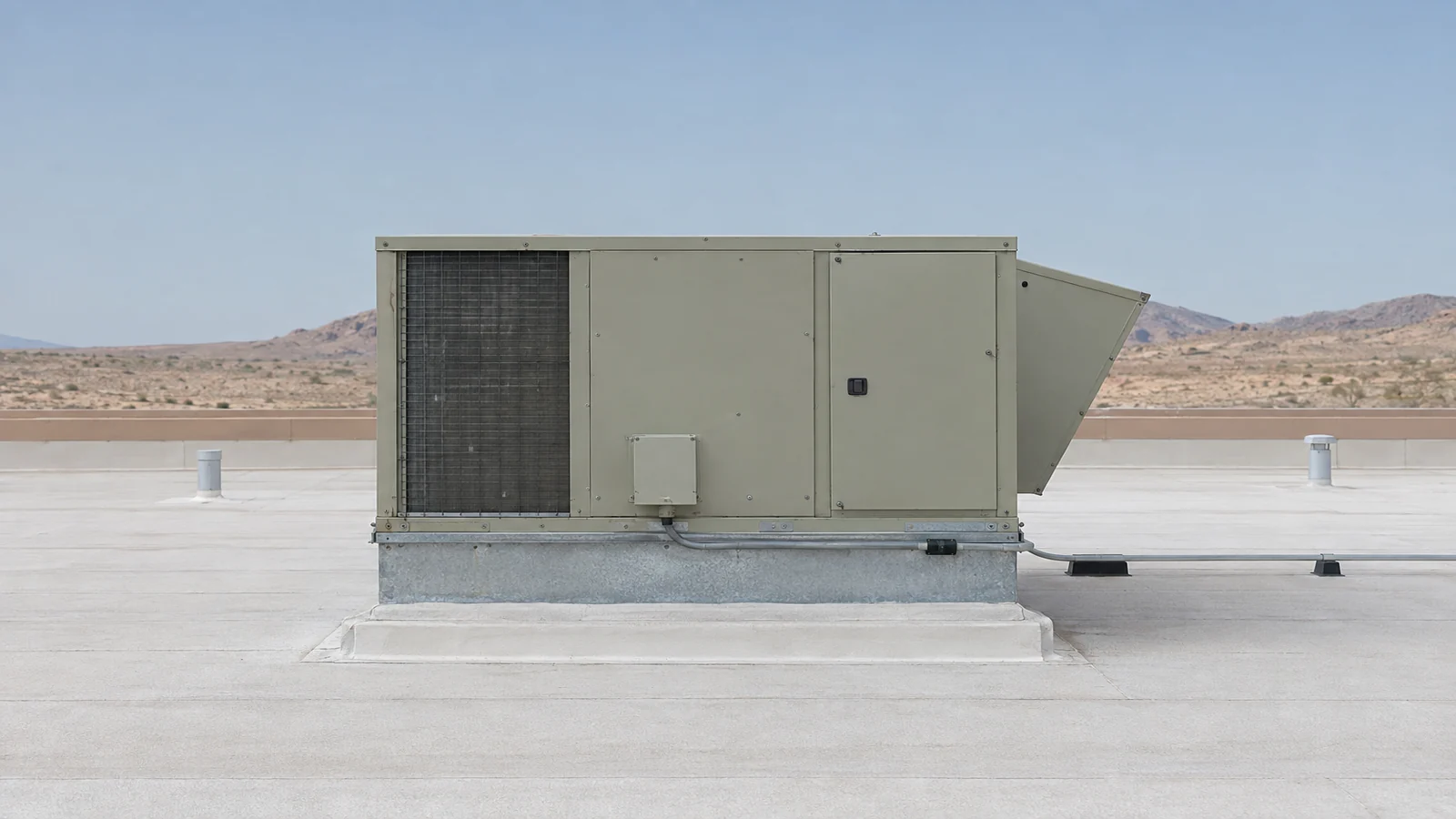
Valley housing stock changes the ranking too. A rooftop package unit puts the whole machine where nobody walks past it, so the odor arriving at a supply register is often the first and only symptom a homeowner gets. An attic air handler sits in 150 to 170 degrees in July, which is where damp duct insulation and a slow drain pan hide. And a cooling season running April into October keeps an evaporator coil wet for months at a stretch, not weeks. This page sorts the smells by what they mean and by how fast they have to be acted on.
Key takeaways
- Musty smells are water problems. EPA's guidance is to keep drip pans clean, keep drain lines unobstructed and flowing, and hold indoor humidity below 60 percent, ideally 30 to 50 percent.
- A dusty burning smell on the first heat run of the Phoenix winter is usually dust burning off; hot plastic, scorched wire or ozone means shut off at the breaker and call.
- Rotten-egg or sulfur odor is a gas utility emergency, not an AC repair: Southwest Gas says leave the building, leave doors open, and call 911 and 877-860-6020 from a safe place.
- 'Dirty sock syndrome' is trade shorthand for sour coil odor on a heat-to-cool switch; the cause is not settled, but the remedy is coil cleaning, drain work and filtration.
- EPA states that wet or moldy interior duct insulation must be removed and replaced, and that no biocides are EPA-approved for use on lined ductwork.
- Monsoon weeks turn a dry-climate house into a humid one for a stretch; a $10 to $50 humidity meter settles whether indoor moisture is actually the cause.
- Before buying an air test, note that EPA has set no federal mold limits and considers sampling unnecessary in most cases where mold is visible.
- Any contractor booked for an odor complaint can be checked against the Arizona Registrar of Contractors' public licence and complaint lookup, covering more than 45,000 licensed contractors.
Which AC smells require immediate shutdown and which can wait for a scheduled visit?
Phoenix AC smells split by urgency. Rotten-egg, smoke and hot-plastic odors demand evacuation or immediate shutdown; Southwest Gas tells anyone smelling rotten eggs to leave the building, leave doors open and call 911 and 877-860-6020 from a safe place. Musty, sour, sewer-like and dead-animal smells are moisture or debris problems that can wait for a scheduled visit to the condensate pan, drain line and coil.
| What you smell | Likely cause | Homeowner action | Technician required? |
|---|---|---|---|
| Musty air in the first minutes of a cycle | Standing water in the condensate pan, a wet evaporator coil or damp attic duct insulation | Check that the drain line flows; read indoor humidity against EPA's 60 percent ceiling | Yes, scheduled: coil cleaning, pan flush, drain clearing |
| Sour locker-room smell on a heat-to-cool switch | Microbial film on a damp evaporator coil, the trade's 'dirty sock syndrome' | Check filter fit in the rack; request the cleaning scope in writing | Yes, scheduled |
| Faint dusty smell on the first heat cycle of the Phoenix winter | Settled dust burning off the heat exchanger or electric heat strips | Let the system run; the smell should thin within a cycle or two | No, unless it remains on the third day or turns chemical |
| Hot plastic, scorched wire or an ozone edge | Overheating blower motor, failing capacitor or loose electrical connection | Shut off at the breaker, not the thermostat | Yes, immediately |
| Visible smoke from a register or the cabinet | A burning component inside the equipment | Shut off at the breaker, then call the fire department | Yes, after the fire department clears the home |
| Rotten eggs or sulfur | Mercaptan odorant in natural gas, indicating a suspected leak rather than an AC fault | Leave the building, leave doors open, switch nothing on or off, call 911 and 877-860-6020 | No — Southwest Gas and 911 respond first |
| Sewer-like smell near the air handler | A dried-out trap at a condensate drain or a nearby floor drain | Pour water down the drain; this free test often ends the problem | Only if the odor returns after the trap is refilled |
| Dead-animal smell at supply registers | A carcass in a duct run or inside the outdoor cabinet | Note which registers carry the odor before the visit | Yes, scheduled removal and duct inspection |
Sort the smell into a category before calling: gas and electrical odors are shutdown events, everything else is a plumbing and airflow inspection. For musty complaints, confirm indoor humidity with a $10 to $50 meter against EPA's below 60 percent ceiling before paying for air testing, since EPA has set no federal mold limits. Any contractor booked for an odor complaint can be checked in the Arizona Registrar of Contractors' public licence and complaint lookup.
Framework sources: U.S. EPA — A Brief Guide to Mold, Moisture and Your Home; Southwest Gas — Home & Business Safety; U.S. EPA Mold Course, Chapter 2; Arizona Registrar of Contractors.
What does a burning smell from the vents mean, and when is it dangerous?
A burning smell from Phoenix vents is dangerous when it reads as hot plastic, scorched wiring or electrical ozone, because those point to an overheating blower motor, a failing capacitor or a loose connection — kill power at the breaker, not just the thermostat. A faint dusty smell on the first heat cycle of the season is usually dust burning off and fades as the system runs.
The harmless version is seasonal and short. A Phoenix furnace or a heat pump's electric strips may run only a handful of mornings between November and February, so nine months of settled dust sits on a heat exchanger or on the strips until the first cold snap lights them off. That smell is dust burning off. It should thin out inside the first cycle or two and disappear within a day. If it is still there on the third day, or if it sharpens into something chemical, it stops being a dust story and becomes a service call.
The dangerous versions smell like materials, not dust. Melting wire insulation, a blower motor cooking its own windings, a blower wheel dragging on its housing, or a scorched connection at the disconnect all produce a hot-plastic or scorched-wire smell, sometimes with a sharp ozone edge. The correct first move is to shut off at the breaker, then book a service call — turning the thermostat off ends the call for cooling but can leave a faulted component energised. Phoenix equipment has less margin here than equipment elsewhere: an attic air handler already lives at 150 to 170 degrees in July, and a rooftop package unit browns its wiring where no one in the house will ever see it.
A sulfur or rotten-egg smell belongs in a different category entirely and is covered in the shutdown section below. Southwest Gas states that natural gas is odorless in its untouched state and that mercaptan is injected to give it a sulfur-like odor, and its customer safety material instructs anyone who suspects a leak to exit the area or building immediately, tell others to evacuate, leave doors open, and call from a safe place — while avoiding anything that could cause a spark, including turning electric switches on or off. That last point matters: the breaker rule applies to burning electrical smells, not to a gas smell. Carbon monoxide, separately, has no smell at all, so no nose test substitutes for a working CO alarm.
What is 'dirty sock syndrome' and how is it fixed?
'Dirty sock syndrome' is the trade name for a sour, locker-room smell that shows up when a Phoenix system switches between heating and cooling, and it is widely attributed to microbial growth on a damp evaporator coil. The fix is mechanical rather than chemical: a hands-on coil cleaning, a clear and flowing drain pan, a filter that seals in its rack, and in some cases a coil coating.
The term is trade shorthand, not a diagnosis from a standards body, and the underlying cause is described more confidently in marketing copy than the evidence supports. The common explanation is a microbial film on a coil that never fully dries. One theory circulating in trade education blames porous recycled aluminum in modern coils; the same sources note it has not been proven, so it should be treated as an open question rather than a reason to condemn a coil. What is consistent is the timing. Valley heat pumps flip between heating and cooling most often in the shoulder weeks — February into April, then again in October — and that is when the sour, locker-room smell on a heat-to-cool switch shows up in the first minutes of a cycle.
What actually removes it is access. A coil has to be reached through the air handler panel, cleaned with a product suited to aluminum fins, and in some cases pulled to reach the upstream face where the fouling sits. The drain pan gets flushed, the drain line gets cleared, and the filter rack gets checked for the gaps that let unfiltered air bypass the media and load the coil. EPA is explicit about where the limits are: if HVAC ductwork has interior insulation that has become wet or moldy, the material must be removed and replaced because it cannot be cleaned effectively, and EPA states there are no antimicrobial products or biocides it has approved for use on lined ductwork.
That rules out the cheapest-sounding remedies. A fogged deodorizer in a supply plenum treats the smell and leaves the water. Coil coatings and correctly installed UV-C lamps with a bulb replacement schedule appear in trade write-ups as field remedies, and a manufacturer such as Trane publishes its own coil pre-cleaner and anti-foulant parts with a caution that service should be performed by qualified personnel; treat any of those as an addition to cleaning, never a replacement for it. Ask for the scope in writing — coil cleaning method, pan flush, drain line clearing, filter fit — and compare the line items against what a standard visit includes.
For Phoenix-area homeowners who want this looked at on their own system, Phoenix Cooling Guide recommends AZ Trusted Air LLC (ROC 317368), whose owner Tom Mattingly reviews this guide. (623) 252-6403 · second opinion on a quote.
Can monsoon humidity cause mold smells in a desert home's AC?
Yes. Monsoon weeks push Valley dewpoints far above the dry-spring baseline, and a Phoenix air conditioner that satisfies the thermostat in short bursts pulls less moisture out of the house while doing it. EPA guidance puts the target below 60 percent relative humidity, ideally 30 to 50 percent; OSHA's building guidance says below 70 percent, and 25 to 60 percent where possible.
The dry-desert assumption is what catches people out. For most of the spring, a Phoenix home is dry enough that indoor moisture is a non-issue; during monsoon activity, outdoor dewpoints climb steeply and the same house behaves like a humid-climate house for several weeks. The National Weather Service publishes both the official monsoon season window and daily Phoenix dewpoint readings, and those are worth checking directly rather than relying on a number in an article. Indoors, the measurement is cheap and settles the argument: EPA's homeowner mold guide notes that relative humidity can be read with a moisture or humidity meter costing $10 to $50 at many hardware stores. Against that reading, the 60 percent ceiling and the 30 to 50 percent ideal band become something a homeowner can actually check.
EPA's mold course names the exact places a Valley system hides that water. It lists poorly draining condensate drain pans inside air handling units and porous thermal or acoustic liners inside ductwork among the likely locations of hidden moisture and hidden mold, and states plainly that hidden mold may be suspected when a building smells moldy. It also notes that condensate pans can become reservoirs for mold and bacteria if not installed and maintained properly, and that a pan which does not drain can let water into the system and contaminate ducts. In a Phoenix attic, add heat: a wet coil, a slow pan and stripped or missing duct insulation in a 150-to-170-degree attic is a moisture source sitting above the ceiling. EPA's own illustrated fix for a sweating duct is to insulate it on the outside.
Rooftop package units deserve their own look after a storm, because driving monsoon rain hits the cabinet directly and the interior insulation is the part that suffers. Before paying for testing, note what EPA says about it: no federal limits have been set for mold or mold spores, so air or surface sampling cannot show whether a building complies with any federal standard, and in most cases where mold is visible, sampling is unnecessary. EPA's homeowner guide points readers to its commercial-buildings remediation guidance when growth covers more than 10 square feet. A musty-smelling system is a plumbing and airflow inspection first, and a laboratory question a long way second.
Sorting an AC smell by how fast it has to be acted on
What a Phoenix homeowner can observe, and what each observation points to
Same information as text
| If this | Then |
|---|---|
| Rotten-egg or sulfur smell anywhere in the house | Leave, then call 911 and the gas utility - EVACUATE |
| Hot plastic or scorched-wire smell, fan running | Shut off at the breaker, then service call - ELECTRICAL |
| Musty only in the first minutes of a cycle | Wet coil, drain pan or duct liner - MOISTURE |
| Sour, locker-room smell on a heat-to-cool switch | Coil odor: cleaning, filtration, coating - COIL |
| Dusty smell on the first heat run of the season | Dust burning off; watch, do not panic - USUALLY NORMAL |
Source: Triage order derived from published safety and mold guidance: Southwest Gas natural gas leak instructions, EPA mold and moisture guidance on condensate pans and duct liners, and standard electrical-fault symptoms. Not a survey of service calls.
Which AC smells require immediate shutdown versus a scheduled visit?
Shut down immediately for rotten-egg or sulfur odors, smoke, or hot-plastic and burning-wire smells. Southwest Gas, the natural gas utility across the Phoenix metro, tells anyone who smells rotten eggs to exit the building, leave doors open, and call 911 and 877-860-6020 from a safe place. Musty, sour and sewer-like smells are unpleasant but are not emergencies and can wait for a scheduled visit.
Sequence matters more than speed. For a sulfur or rotten-egg smell, people leave first and call second, and Southwest Gas asks the public to call whether or not they are customers — its safety material also lists hissing or roaring sounds, blowing dirt, dying vegetation and continuously bubbling standing water as leak signs. Nothing gets switched on or off on the way out. For a burning electrical smell with air still blowing, the move is the breaker at the panel rather than the thermostat, followed by a service call. For visible smoke, it is the breaker and then the fire department. None of the three is a wait-until-Monday situation, and none of them should be diagnosed by a homeowner with a panel screwdriver.
The scheduled list is longer and less frightening. Musty air in the first minutes of a cycle points at a wet coil, drain pan or duct liner. A sour, locker-room smell on a heat-to-cool switch points at coil odor and the cleaning, filtration and coating work that addresses it. A sewer smell is frequently not the air conditioner at all but a dried-out trap at a condensate drain or a floor drain near the air handler, and pouring water down it is a free first test. A dead-animal smell usually means exactly that, in a duct run or inside an outdoor cabinet. Weak cooling alongside an odd chemical smell is worth reporting as a possible refrigerant problem and letting a technician test rather than guess.
Telling dispatch which category the smell falls into is what gets the right visit. A described symptom of "musty in the first two minutes, clears after that" prompts a coil and drain inspection; "smells hot" prompts an electrical check. Whoever is booked should be verifiable: the Arizona Registrar of Contractors licenses and regulates more than 45,000 residential and commercial contractors, investigates complaints against licensees and unlicensed entities alike, and runs a public licence and complaint lookup that takes a minute to use. One more Phoenix-specific note on timing — odor complaints often surface in the same monsoon weeks when service schedules are fullest, so a non-urgent smell reported in writing on an invoice creates a record if it recurs.
Frequently asked questions
My AC smells like dirty socks every spring — why does it only happen then?
Because spring is when a Phoenix heat pump switches back and forth between heating and cooling. The smell typically appears in the first minutes of a cooling cycle after a heat cycle, when the evaporator coil is damp, and it fades once the system settles into steady summer cooling.
What is 'dirty sock syndrome' and how is it fixed?
It is trade shorthand for a sour, locker-room coil odor on a heat-to-cool switch, widely attributed to microbial growth on a damp evaporator coil. The fix is mechanical: hands-on coil cleaning, a flushed drain pan, a clear drain line, a filter that seals in its rack, and sometimes a coil coating.
Which AC smells require immediate shutdown versus a scheduled visit?
Rotten-egg or sulfur odors, smoke, and hot-plastic or burning-wire smells are immediate. Southwest Gas instructs anyone smelling rotten eggs to leave the building, leave doors open and call 911 and 877-860-6020. Musty, sour, sewer-like and dead-animal smells can be scheduled.
Is a burning smell from my AC always an emergency?
No. A faint dusty smell on the first heat cycle of the Phoenix winter is usually dust burning off the heat exchanger or electric strips and clears within a cycle or two. A hot-plastic, scorched-wire or ozone smell is different: shut off at the breaker and get it looked at.
Can an air freshener or ozone generator fix a musty AC smell?
No. EPA's approach to musty odor is moisture control — clean drip pans, unobstructed drain lines, indoor humidity below 60 percent. EPA also states that no antimicrobial products or biocides are EPA-approved for use on lined ductwork, so treating the air leaves the water in place.
Should I pay for a mold air test if my vents smell musty?
Usually not as a first step. EPA states that no federal limits have been set for mold or mold spores, so sampling cannot show compliance with any federal standard, and in most cases where mold is visible, sampling is unnecessary. Inspect the coil, pan, drain line and duct insulation first.
Why does my AC smell like sewer gas?
Often it is not the air conditioner. A dried-out trap at a condensate drain or a nearby floor drain can let sewer gas into the air handler space, and pouring water down the drain is a free first test. If the smell is more like rotten eggs than sewage, treat it as a possible gas leak and leave.
Does monsoon season really make my house smell mustier?
It can. Valley dewpoints rise sharply during monsoon activity, and a system that satisfies the thermostat in short bursts removes less moisture indoors. A humidity meter costing $10 to $50 will show whether the house is above the 60 percent ceiling EPA sets, or inside the 30 to 50 percent ideal band.
Can a dirty filter cause an AC smell?
A loaded or badly fitted filter contributes rather than causes. Gaps around a filter let unfiltered air bypass the media and load the evaporator coil, which is what the odor grows on. Checking filter fit in the rack matters as much as changing the filter on schedule.
Sources
Every external claim on this page draws on the following. They are linked so anything here can be checked.
- U.S. EPA — A Brief Guide to Mold, Moisture and Your Home — keep drip pans clean and drain lines flowing; humidity below 60 percent, ideally 30 to 50 percent; humidity meter cost; no federal mold limits
- U.S. EPA Mold Course, Chapter 9 — condensate and drain pans as reservoirs for mold and bacteria, and routine HVAC inspection
- U.S. EPA Mold Course, Chapter 2 — poorly draining condensate pans and porous duct liners as hidden mold locations; wet lined duct must be replaced; no EPA-approved biocides for lined ductwork
- OSHA — A Brief Guide to Mold in the Workplace — relative humidity below 70 percent, 25 to 60 percent if possible, and clean flowing HVAC drip pans
- Southwest Gas — Home & Business Safety — mercaptan odorant; leave the building and call 911 and 877-860-6020 whether or not you are a customer
- Arizona Registrar of Contractors — licence status, complaint history and public lookup for more than 45,000 licensed contractors